
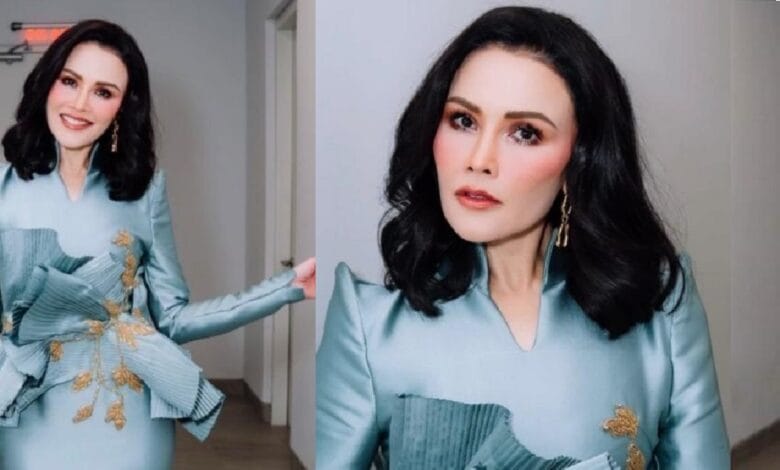
Sarimah Ibrahim Calls Out Overacting Culture, Urges More Authentic Screen Performances

PETALING JAYA: Veteran actress Sarimah Ibrahim has spoken out against what she describes as a growing tendency in the acting world to equate excessive crying and shouting with good performance, warning that such portrayals risk diluting the true essence of acting.
In a candid post shared on Threads, Sarimah stressed that powerful acting is not defined by how loudly a line is delivered or how extreme an emotional outburst appears on screen. Instead, she said, it lies in an actor’s ability to fully embody a character and convey emotion with honesty and restraint.
“Stop normalising excessive crying, over-the-top screaming and exaggerated performances as signs of good acting. Good acting comes from fully placing yourself inside the character,” she wrote.
Sarimah’s remarks reflect a broader concern within the industry about the misconception that emotions must be amplified to ensure audiences ‘get the message’. According to her, this approach not only undermines realism but also underestimates the audience’s emotional intelligence.
She explained that truly compelling performances often come from subtlety, where emotions are felt rather than explicitly shown.
Why Subtlety Matters in Acting
Elaborating on her point, Sarimah noted that in real life, people rarely express their deepest emotions in dramatic ways. Feelings such as grief, fear and disappointment are more often concealed, processed internally or revealed through small, nuanced actions.
“Most people try to hide their sadness, fear and frustration. We don’t usually show exactly what we think or feel,” she said.
From her perspective, performances that rely heavily on exposition — where emotions are spelled out or force-fed to viewers — do not reflect strong acting technique. Instead, they risk turning complex emotional moments into superficial displays.
Sarimah argued that effective acting should mirror human behaviour, allowing audiences to interpret emotions through silence, body language and restrained dialogue. When done well, she said, this approach creates a deeper connection between the character and the viewer.
Her comments have resonated with many within the creative community, sparking discussions about acting standards, training and the pressures faced by younger performers to “perform big” in order to stand out.
As someone who has spent decades honing her craft across television, film and theatre, Sarimah’s message is seen as a constructive reminder that acting is not about exaggeration, but about truth.
Ultimately, her call is for the industry to re-centre its understanding of good acting — not as a competition of who can cry the hardest or shout the loudest, but as a discipline rooted in empathy, observation and emotional authenticity.
-wilayah.com.my