
National Tahfiz Council to Drive Reform and Expand Opportunities for Huffaz, Says Ahmad Zahid

KUANTAN: The establishment of the National Tahfiz Council is expected to become a major catalyst in transforming Malaysia’s tahfiz education system by creating a more coordinated framework and expanding opportunities for huffaz to excel in various professional fields.
Deputy Prime Minister Datuk Seri Dr Ahmad Zahid Hamidi said the formation of the council was approved by the Cabinet last week and would serve as the main platform for strengthening and aligning the direction of tahfiz education nationwide.
He said he had been entrusted by Prime Minister Datuk Seri Anwar Ibrahim to chair the council, describing the responsibility as an important mission to elevate the status of tahfiz institutions and ensure their continued relevance in the country’s education ecosystem.
According to Ahmad Zahid, tahfiz education should no longer be perceived as a pathway limited to religious studies alone.
Instead, he said it should be recognised as a broad educational stream capable of producing highly skilled, knowledgeable and competitive individuals who can contribute meaningfully to national development.
“The establishment of the National Tahfiz Council is a major step towards empowering tahfiz institutions and ensuring that huffaz receive wider recognition within the national education system and the country’s development agenda.
“I want tahfiz education to be seen as a pathway with vast opportunities. Students should be able to move confidently from madrasahs to universities, from memorisation to skills acquisition and from tahfiz institutions to professional careers,” he said.
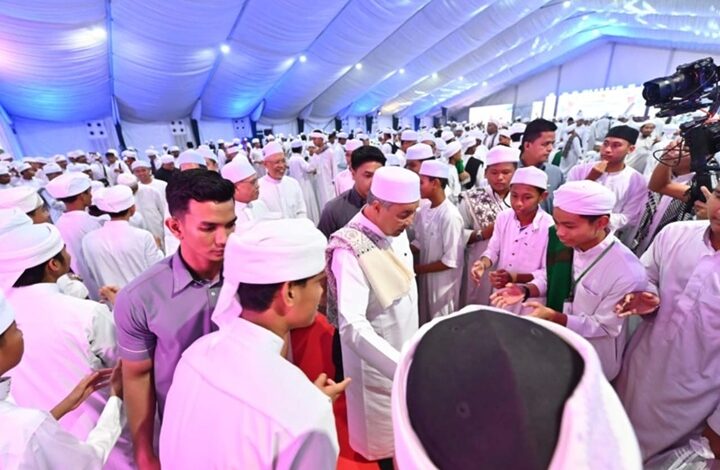
He was speaking at the Pahang Huffaz Gathering 2026 held at Rumah Pahang, Kompleks Yayasan Pahang here, which attracted more than 5,000 huffaz from across the state.
The event served as a platform to celebrate the achievements of Quran memorisers and acknowledge their role in shaping society.
Ahmad Zahid said the government wants to ensure that tahfiz graduates are no longer constrained by the perception that their career prospects are limited to religious institutions.
He believes huffaz possess tremendous potential to succeed in various sectors, including professional services, entrepreneurship, technology and public administration, provided they are given the necessary opportunities and support.
“My dream is to see huffaz throughout the country succeed not only in matters of faith and spirituality but also excel in worldly pursuits.
“That is why we must intensify efforts to ensure the future of tahfiz students is no longer overshadowed by stereotypes that limit them to religious institutions alone. They should be able to achieve success in all walks of life,” he said.
He stressed that transforming tahfiz education requires close collaboration among tahfiz institutions, universities, government agencies, government-linked companies (GLCs) and industry players.
According to him, all stakeholders must work together to create a comprehensive educational ecosystem that supports huffaz from their early studies to their professional careers.
Through the National Tahfiz Council, he said, more opportunities are expected to be created in higher education, skills training, career development and employment placement.
Such initiatives, he added, will help produce tahfiz graduates who possess not only strong religious foundations but also professional competencies and the ability to compete in a rapidly changing world.
Ahmad Zahid also emphasised that efforts to strengthen tahfiz education should not focus solely on academics.
He said equal attention must be given to character development, leadership qualities and 21st-century skills to ensure huffaz remain relevant in the future economy.
“Huffaz possess valuable qualities such as discipline, integrity and strong moral values.
“When these strengths are combined with modern knowledge and professional skills, they can become an invaluable asset to the nation,” he said.
He expressed hope that the National Tahfiz Council would serve as a bridge connecting tahfiz institutions with universities, industries and employers, ensuring graduates enjoy broader career opportunities and a more promising future.
With the establishment of the council, the government hopes tahfiz education will continue to evolve into a respected and inclusive educational stream capable of producing well-rounded huffaz who excel in religious knowledge, practical skills and national service.