
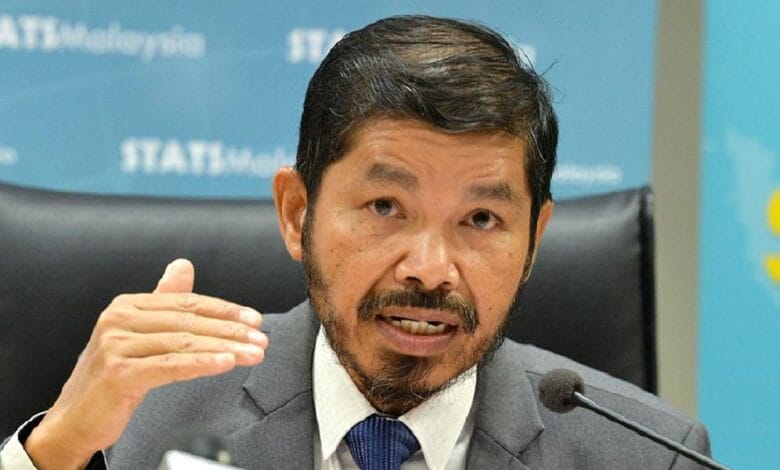
Malaysia Faces Demographic Shift As Elderly Population Continues To Rise

PETALING JAYA: Malaysia is continuing to experience significant demographic changes as the proportion of young people declines while the elderly population steadily increases, reflecting the country’s transition towards an ageing society.
Mohd Uzir Mahidin said first-quarter 2026 data showed that the percentage of residents aged 65 and above rose to 8.0 per cent compared to 7.9 per cent during the same period last year.
At the same time, the proportion of young people aged between zero and 14 years declined from 21.8 per cent to 21.6 per cent.
“The working-age population between 15 and 64 years meanwhile increased slightly from 70.3 per cent to 70.4 per cent,” he said in a statement on Malaysia’s demographic statistics for the first quarter of the year.
He said the trend indicates that Malaysia is gradually moving towards ageing nation status, which could create new long-term challenges involving the country’s economy, healthcare system and social structure.
According to him, the male population increased to 18 million compared with 17.9 million last year, while the female population rose to 16.3 million from 16.2 million previously.
“The national gender ratio now stands at 110 males for every 100 females, while among citizens the ratio is 102 males for every 100 females,” he said.
In the same report, Mohd Uzir said live births continued to decline, recording a 3.1 per cent drop to 94,807 births compared with 97,843 births during the corresponding period last year.
Male births continued to outnumber female births, with 49,137 male babies recorded compared with 45,670 female babies.
“The sex ratio at birth is 108 male babies for every 100 female babies,” he said.
Selangor recorded the highest number of live births with 17,990 births, representing 19 per cent of total births nationwide.
Meanwhile, Labuan recorded the lowest number with only 294 births or 0.3 per cent.
Mohd Uzir said mothers aged between 30 and 39 accounted for the highest number of births with 50,917 births or 53.7 per cent of total live births.
This was followed by mothers aged 20 to 29, who contributed 38.4 per cent of overall births.
Meanwhile, mothers aged 40 and above contributed 6.4 per cent while those below 20 years old accounted for 1.4 per cent.
“On average, one baby was born every minute, 44 babies every hour and 1,053 babies every day during the first quarter of this year,” he said.
In terms of deaths, a total of 49,139 deaths were recorded during the same period, marking a 1.5 per cent decrease compared with 49,863 deaths in the first quarter of 2025.
He said male deaths remained higher at 28,162 compared with 20,977 female deaths.
“The mortality sex ratio stands at 134 males for every 100 females,” he said.
Selangor also recorded the highest number of deaths with 8,042 cases or 16.4 per cent of total deaths nationwide, while Putrajaya recorded the lowest with 81 deaths.
Individuals aged 60 and above accounted for the highest number of deaths with 35,130 cases or 71.5 per cent of total recorded deaths.
Demographic experts believe the trend serves as an important signal for Malaysia to strengthen policies involving elderly care, public healthcare, social protection and workforce development to prepare for future population structure changes.
-wilayah.com.my