
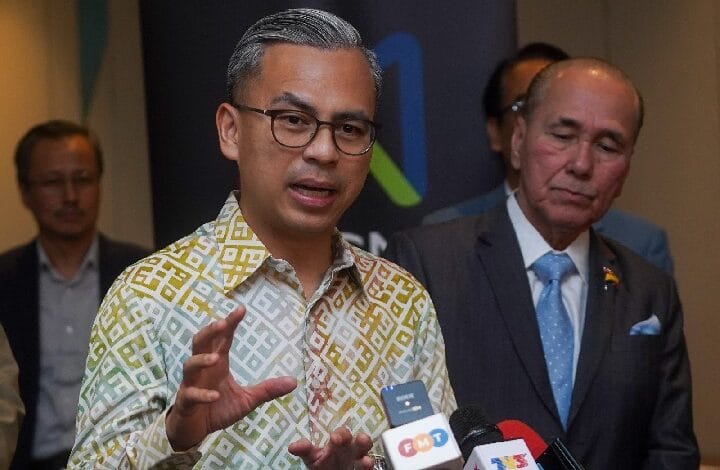
Fahmi: Social Media Age Verification Designed to Protect Children Under 16

KUALA LUMPUR: The government’s upcoming age-verification requirement for social media users is intended to safeguard children from online risks rather than permanently restrict their access to digital platforms, Communications Minister Datuk Fahmi Fadzil said.
He explained that the measure is part of the Child Protection Code (CPC) and the Risk Mitigation Code (RMC), both introduced by the Malaysian Communications and Multimedia Commission (MCMC) under the Online Safety Act 2025.
The two regulatory frameworks came into force on June 1 and are aimed at creating a safer online environment, particularly for children and young users who face increasing exposure to cyber threats and harmful digital content.
According to Fahmi, licensed social media service providers are required to implement age-verification systems to ensure that account holders meet the minimum age requirement established under the framework.
“The focus is on verifying age rather than conducting broad identity verification.
“Individuals aged 16 and above are allowed to register and maintain social media accounts, while those below the minimum threshold will not be permitted to create or operate accounts until they reach the required age,” he said during a parliamentary session.
He was responding to questions regarding the purpose of age verification and the safeguards in place to protect users’ personal information.
Fahmi stressed that any age-verification mechanism must be implemented in a manner that respects privacy while maintaining security and regulatory compliance.
Under the CPC, digital service providers are required to comply with data protection principles, including collecting only the information necessary for age verification and ensuring that such data is disposed of appropriately after the process is completed.
“The information gathered must be limited strictly to what is required for verification purposes and cannot be retained unnecessarily,” he said.
To prevent manipulation, age verification must rely on official documentation rather than self-declared information.
Accepted documents include MyKad, passports, birth certificates and other government-recognised credentials that can accurately confirm a user’s age.
Fahmi said reliance on official records is necessary because self-declaration systems can easily be bypassed and may fail to provide adequate protection for children.
The framework also accommodates recognised documents issued by competent authorities outside Malaysia to ensure that children receive equal levels of online protection regardless of nationality or documentation status.
According to the minister, the policy is not intended to permanently prevent children from participating in online communities.
Instead, it seeks to delay social media account ownership until the age of 16, when users are generally considered more capable of navigating digital environments responsibly and safely.
The initiative, known as “Wait Until 16”, forms part of broader efforts to reduce children’s exposure to cyberbullying, online exploitation, scams, harmful content and other digital threats.
Fahmi said the government believes a safer online ecosystem requires a balance between access to technology and adequate protection for younger users.
“The objective is to ensure children and families can benefit from the digital world while minimising exposure to risks that may affect their safety, wellbeing and development,” he said.
The policy represents one of Malaysia’s latest efforts to strengthen online safety standards as digital platforms continue to play a growing role in the daily lives of young people.