CATL Unveils World’s First Commercially Validated Sodium-Ion Energy Storage System

MUNICH: Global battery manufacturer CATL has officially introduced what it describes as the world’s first field-validated sodium-ion energy storage system, marking a major milestone in the commercialisation of sodium-based battery technology.
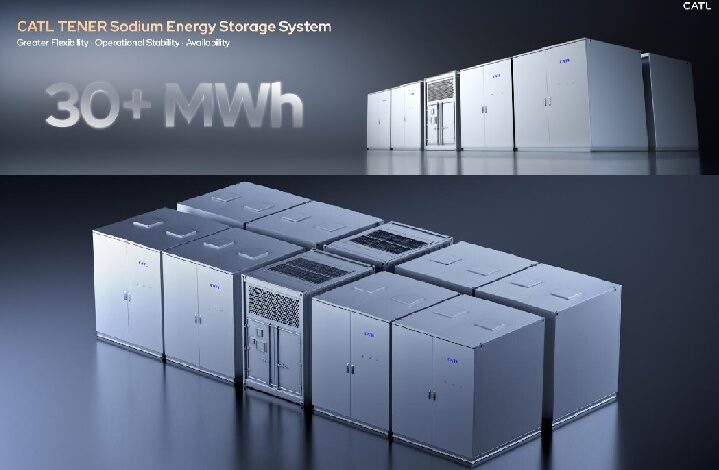
The new solution, known as the TENER Sodium Energy Storage System, was launched in Munich and is positioned as a next-generation alternative to conventional lithium-based energy storage technologies that currently dominate the global market.
According to CATL, the system has reached full commercial readiness across technology development, manufacturing capacity and supply chain infrastructure, enabling large-scale deployment in the near future.
William Wu, Director of CATL’s Energy Storage Technology Center, said the launch reflects the company’s long-term vision of creating a more sustainable and resilient energy ecosystem.
He noted that sodium offers significant advantages due to its abundance and widespread availability, reducing dependence on lithium resources that are concentrated in a limited number of regions.
“CATL believes sodium and lithium will work together as the twin pillars of future energy storage infrastructure.
“Our goal is to provide safe, reliable and accessible energy solutions capable of supporting global energy demand for decades to come,” he said during the launch event.
The TENER Sodium system features a modular architecture with more than 30 megawatt-hours of rated capacity, allowing developers to tailor installations according to specific project requirements.
Its modular design also simplifies maintenance, enabling individual units to be isolated and replaced without disrupting the operation of the wider energy storage facility.
The system supports multiple storage-duration configurations ranging from one hour to eight hours, providing greater flexibility for utility-scale and commercial applications.
CATL has also developed a dedicated battery management system designed specifically for sodium-ion chemistry, improving state-of-charge accuracy and enhancing operational safety.
Among the technology’s key strengths are improved performance in extreme temperatures, lower auxiliary energy consumption and reduced noise levels compared with conventional energy storage solutions.
The company said the system operates at approximately 65 decibels, making it more suitable for installations located closer to urban centres and energy demand hubs.
Another notable feature is its compatibility with lithium iron phosphate (LFP) battery platforms, allowing customers to switch between sodium-ion and lithium-ion technologies without major redesigns or additional certification requirements.
This flexibility provides energy developers with greater protection against fluctuations in lithium prices and evolving market conditions.
To accelerate commercial deployment, CATL has invested heavily in manufacturing capacity, supply chain development and material production for sodium-ion batteries.
The company has expanded production facilities and established an integrated ecosystem covering materials, cell manufacturing, system integration and commercial deployment.
CATL plans to begin delivering sodium-ion energy storage systems to customers in China from September this year, with international deliveries scheduled to commence in June 2027.
The company expects cumulative shipments to reach one gigawatt-hour by the end of 2026 as demand for alternative energy storage technologies continues to grow.
Industry observers view the launch as a significant step towards diversifying global energy storage options at a time when renewable energy generation and electricity demand are increasing rapidly.
With solar, wind and AI-driven power consumption reshaping energy markets worldwide, technologies capable of delivering reliable, cost-effective and scalable storage solutions are becoming increasingly important.
The debut of TENER Sodium not only strengthens CATL’s leadership position in the battery sector but also signals the beginning of a new phase in which sodium-ion technology moves from research laboratories into large-scale commercial deployment.