
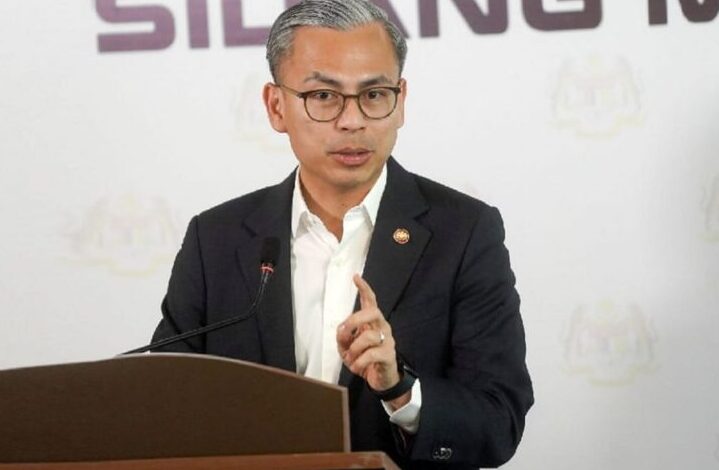
Fahmi: Petrochemical Supply Crunch Could Disrupt Food Packaging, Government Monitoring Closely

PUTRAJAYA: The government is closely tracking a global petrochemical supply crunch that could disrupt Malaysia’s food packaging chain and the availability of essential goods, said Communications Minister and Madani government spokesperson Fahmi Fadzil.
He said the issue was discussed at a recent meeting of the National Economic Action Council, with further assessments now underway by the Ministry of Economy and the Ministry of Investment, Trade and Industry.
“The government is aware of, understands and is concerned about the potential impact on supply chains following the situation involving the Strait of Hormuz,” he said during a post-Cabinet press conference.
He added that several additional studies are still being carried out, with findings expected to be presented at the next MTEN meeting as authorities refine their response strategy.
One immediate concern is the possible disruption to packaging for subsidised goods, such as cooking oil sold in 1kg polybags — a key item aimed at easing the cost of living for lower-income households.
Fahmi said the government is working to ensure that any supply interruptions do not significantly affect food production and distribution, particularly in sectors heavily reliant on petrochemical-derived materials.
As part of initial mitigation measures, the Association of Banks in Malaysia has announced that small and medium enterprises (SMEs), including micro-enterprises, may approach commercial banks to seek flexibility on their existing financing facilities.
This move is intended to help affected businesses maintain operations if raw material shortages persist, especially in food manufacturing and packaging industries that depend heavily on petrochemical inputs.
Industry concerns have also been raised by the Malaysian Plastics Manufacturers Association, which warned that the plastics sector could face continued volatility in the near to medium term due to geopolitical tensions in West Asia.
The association noted that prolonged disruptions may lead to shortages of essential goods, rising production costs and downstream inflationary pressures, ultimately impacting consumers through higher prices.
In a separate development, Fahmi said a proposal by the Gabungan Kelab Media Malaysia to maintain a monthly fuel quota of 300 litres under the Budi Madani RON95 initiative for media practitioners is expected to be discussed at the next MTEN meeting.
He clarified that the matter has yet to be formally deliberated, as the most recent MTEN session focused on issues under the Ministry of Tourism, Arts and Culture (Motac) and MITI.
“This proposal is known to MTEN but is still pending discussion. The previous meeting focused on other sectors, and the Ministry of Communications’ matters have not yet been tabled,” he said.
Fahmi added that he has requested for issues involving the communications sector, including applications from the creative industry, to be included in the agenda of the next council meeting.
The ongoing situation underscores the interconnected nature of global supply chains and highlights the government’s efforts to mitigate potential economic and consumer impacts amid external disruptions.
-wilayah.com.my