Government Prioritises Strengthening BUDI MADANI Over New T20 Subsidy Classification

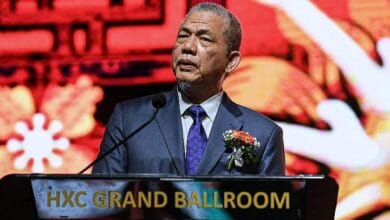
Amir Hamzah Azizan said the government is currently prioritising efforts to strengthen the implementation of the BUDI MADANI initiative rather than discussing new classifications involving the T20 income group.
He explained that the government’s immediate priority is to improve the delivery and effectiveness of BUDI Diesel and BUDI95 to ensure fuel subsidies are channelled more efficiently to deserving recipients nationwide.
According to Amir Hamzah, the Cabinet has not held any discussions regarding new categorisation mechanisms for the T20 group under the targeted fuel subsidy framework.
“As previously explained by Communications Minister Datuk Fahmi Fadzil, there have been no specific Cabinet discussions concerning a new T20 classification.
“Our focus now is to strengthen the implementation of BUDI, including expanding the system to Sabah and Sarawak so that its benefits can reach more people,” he said.
He made the remarks after attending the handover ceremony for an additional preschool block under the Integrated Special Education Programme at Sekolah Kebangsaan Tan Sri Awang Had Salleh.
Amir Hamzah was responding to public concerns regarding the actual definition of the T20 category and possible future changes to fuel subsidy eligibility criteria.
At the same time, he stressed that the government must remain cautious in shaping subsidy policies due to ongoing global economic uncertainties and geopolitical tensions affecting international oil markets.
He said any subsidy-related decisions must balance public needs with the country’s fiscal capacity while ensuring fuel supply stability remains intact.
Responding to calls from certain groups to restore the fuel subsidy quota to 300 litres under the BUDI MADANI programme, Amir Hamzah said the government needs to carefully balance subsidy spending with broader national financial responsibilities.
According to him, despite disruptions caused by geopolitical conflicts in West Asia, Malaysia has managed to maintain stable fuel supplies due to domestic oil production capabilities and the experience of local petroleum companies.
“So far, Malaysia remains stable even though some countries are experiencing supply disruptions severe enough to force petrol stations to shut down,” he said.
The minister explained that the reduction of the subsidy quota from 300 litres to 200 litres was based on actual usage data collected from subsidy recipients.
He said the average monthly fuel consumption among BUDI95 beneficiaries was only about 98 litres, indicating that the revised quota remains sufficient for most users.
Amir Hamzah added that the adjustment was necessary to reduce subsidy leakages and ensure the government can manage national finances more sustainably.
Without proper controls, he warned, subsidy spending could become excessively burdensome and potentially affect other important national priorities such as healthcare, education and infrastructure development.
The government introduced BUDI MADANI as part of broader subsidy reform efforts aimed at ensuring fuel assistance is targeted more effectively and does not disproportionately benefit higher-income groups.
The initiative is also seen as part of Malaysia’s wider fiscal reform strategy to strengthen long-term financial sustainability amid growing global economic challenges and market uncertainty.
-wilayah.com.my