
First Meeting of the 15th Parliament Ends With Focus on Economic Resilience and West Asia Conflict

KUALA LUMPUR — The parliamentary sittings of the Dewan Rakyat and Dewan Negara for the First Meeting of 2026 concluded today, with strong emphasis placed on strengthening Malaysia’s economic resilience, fiscal management and monitoring the economic impact of the ongoing conflict in West Asia.
The Dewan Rakyat convened from January 19 to March 3, 2026, while the Dewan Negara held its session from February 19 until March 12, 2026.
During the session, several key bills were passed, including the Capitation Grant Bill 2026, which revises the annual grants allocated to state governments based on their population size.
Deputy Finance Minister Liew Chin Tong said the adjustment aims to ensure fairer distribution of federal support, particularly for states with smaller populations and more limited revenue bases.
The Senate also approved the Supplementary Supply Bill (2025) 2026, which involved additional operating expenditure amounting to RM8.4 billion.
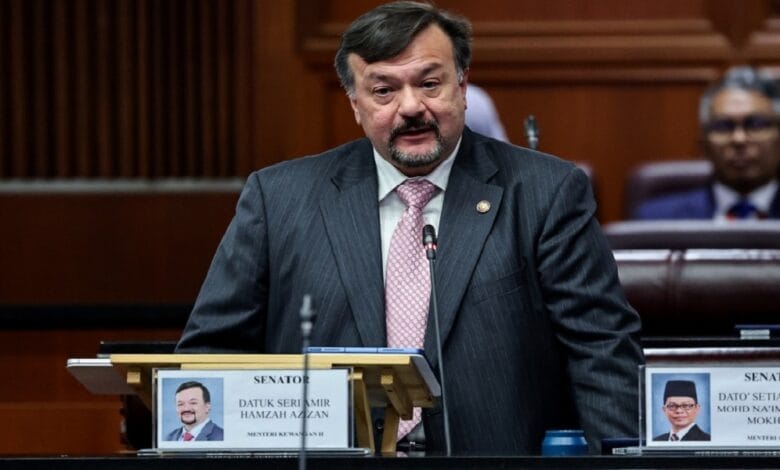
Finance Minister II Datuk Seri Amir Hamzah Azizan said the allocation had been fully utilised in 2025 without affecting the government’s fiscal deficit target, which remained at 3.8 per cent.
He noted that rising global crude oil prices have increased government revenue through higher dividends and taxes from Petronas.
However, the same trend has also increased the cost of fuel subsidies as long as the targeted subsidy mechanism has yet to be fully implemented.
On the performance of the national currency, the Ministry of Finance said Bank Negara Malaysia continues to monitor the ringgit closely to ensure that currency movements remain orderly.
Meanwhile, Plantation and Commodities Minister Datuk Seri Dr Noraini Ahmad said the latest tariffs imposed by the United States are expected to have only minimal impact on Malaysia’s palm oil exports.
She explained that the United States represents only about 1.1 per cent of Malaysia’s palm oil export market, compared with key markets such as India, Kenya and China.
Deputy Investment, Trade and Industry Minister Sim Tze Tzin said Malaysia’s policy of maintaining strong trade relations with all countries helped push the nation’s total trade value past the RM3 trillion mark for the first time in 2025.
Total trade reached RM3.06 trillion last year, representing a 6.2 per cent increase compared with 2024.
Although Malaysia’s trade volume with Iran remains relatively small at approximately RM2.45 billion, the government will continue to monitor developments in West Asia to ensure supply chains remain stable.
Deputy Economy Minister Datuk Mohd Shahar Abdullah said the government is also evaluating potential cost-push inflation risks arising from rising global energy prices linked to the conflict.
In the technology sector, the Ministry of Investment, Trade and Industry said the government has identified and supported the establishment of more than six local integrated circuit design companies.
The initiative aims to develop local technology and intellectual property under the “Made by Malaysia” concept.
The ministry also clarified that the licensing certainty commitment under the Reciprocal Trade Agreement does not affect the government’s authority to enforce technical requirements on Lynas Malaysia or other rare earth companies operating in the country.
To ensure the continuation of transportation infrastructure projects, the government has approved a RM135 million soft loan to complete the East Klang Valley Expressway project, which is currently about 90 per cent completed.
The Second Meeting of the Dewan Rakyat is scheduled to take place from June 22 to July 16, 2026, while the Dewan Negara will convene from July 20 to August 4, 2026.
-wilayah.com.my