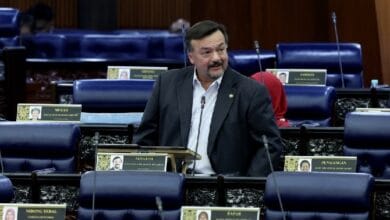

Abdul Hadi’s View Seen as Grounded, but Challenged by PKR Youth on Diesel Pricing

PETALING JAYA, April 8 — Remarks by Parti Islam Se-Malaysia president Abdul Hadi Awang on diesel price increases in Peninsular Malaysia have been viewed by some as grounded in domestic realities, even as they were challenged by Angkatan Muda Keadilan (AMK).
Abdul Hadi had argued that Malaysia’s status as an oil-producing nation should provide some buffer against external geopolitical pressures, including disruptions linked to routes such as the Selat Hormuz.
He also questioned the disparity in diesel pricing between Peninsular Malaysia and Sabah and Sarawak, suggesting that internal factors such as resource management and leakages should be examined more closely.
His remarks highlighted the possibility of leveraging domestic energy resources and regional cooperation, particularly among Muslim-majority nations, as a way to reduce reliance on global market volatility.
However, AMK vice-chief Nadia Nazri pushed back against the argument, stating that it overlooks the complexities of global energy markets.
She pointed out that despite being an oil producer, Malaysia still imports refined petroleum products, making domestic fuel prices susceptible to international market fluctuations.
According to her, rising global benchmarks and geopolitical tensions continue to drive up costs, with key chokepoints such as the Selat Hormuz affecting supply chains and pricing worldwide.
She also defended the government’s regional pricing approach, noting that differences in geography, logistics and economic structure justify variations between Peninsular Malaysia and East Malaysia.
The exchange underscores an ongoing debate over whether domestic policy and governance issues play a larger role in fuel pricing than global market forces.
While Abdul Hadi’s perspective emphasises internal capacity and alternative strategies, AMK maintains that global dynamics remain the dominant factor influencing fuel costs.
The differing views reflect the broader challenge of balancing national resource management with the realities of an interconnected global energy market.
-wilayah.com.my