
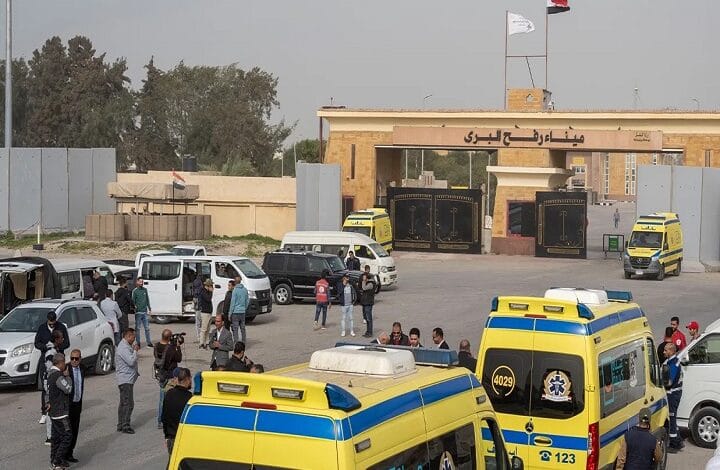
UN Urges More Countries to Accept Gaza Patients After Partial Reopening of Rafah Crossing

NEW YORK — The United Nations has called on more countries to accept patients from the Gaza Strip for medical treatment following the limited reopening of the Rafah Border Crossing between Gaza and Egypt.
The United Nations Office for the Coordination of Humanitarian Affairs (OCHA) stressed that civilians must be allowed to leave and return voluntarily and safely, in line with international law, while essential humanitarian supplies should enter Gaza with minimal restrictions.
According to OCHA, more than 18,500 patients, including around 4,000 children, are currently awaiting medical evacuation due to the lack of adequate healthcare facilities in Gaza.
“The most effective option remains transferring patients to the West Bank, including East Jerusalem, and restoring damaged health infrastructure in Gaza. Until then, member states are urged to accept more patients,” OCHA said.
The office added that evacuation efforts are being supported by the World Health Organization (WHO), which is helping coordinate medical referrals and treatment abroad.
With the partial reopening of Rafah, some patients and their companions are able to travel directly to Egypt, while others must pass through the Kerem Shalom Crossing, which is controlled by Israel.
Meanwhile, the United Nations Development Programme (UNDP) has indicated its readiness to arrange transportation for returning patients from Rafah to Nasser Hospital in Khan Younis once reception facilities are established.
Reception points are staffed by psychologists and protection specialists and equipped with food supplies, information materials and internet access to provide immediate support and referrals.
OCHA also expressed ongoing concern over the impact of continued hostilities on Gaza’s civilian population. Recent attacks have reportedly left dozens injured and forced many families to flee after their temporary shelters were destroyed.
The UN and its partners are currently providing temporary housing and essential aid to affected families, while calling on the international community to scale up humanitarian assistance to meet growing needs.
-wilayah.com.my