
Appointment of Malek Razak as Armed Forces Chief Seen as Catalyst for Institutional Reform

KUALA LUMPUR — The appointment of Malek Razak Sulaiman as the 24th Chief of Defence Forces is being viewed as a strategic move to drive institutional reform and restore public confidence in Malaysia’s defence establishment.
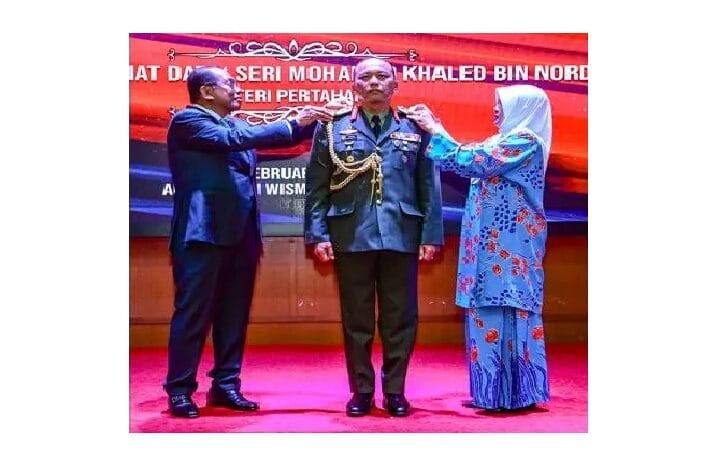
The appointment was granted royal assent by Sultan Ibrahim and formalised at a ceremony officiated by Defence Minister Mohamed Khaled Nordin at Wisma Pertahanan.
Malek Razak, aged 59, was also promoted to the rank of General with effect from February 1, reinforcing his leadership position within the Angkatan Tentera Malaysia at a time of growing regional and global security challenges.
In a statement, the Malaysian Armed Forces described the appointment as a critical step towards strengthening governance, accountability and leadership discipline within the institution.
The statement noted that modern military leadership requires not only operational excellence but also strong ethical standards, professionalism and moral authority.
“Leadership by example, zero tolerance for misconduct and support for checks and balances are essential to rebuilding internal resilience,” it said.
The new appointment is also seen as an opportunity to reform organisational culture, management systems and leadership practices to ensure greater transparency and efficiency.
Efforts to rebuild trust, both internally and externally, are expected to enhance the armed forces’ readiness and reinforce Malaysia’s reputation as a professional and credible defence force.
Malek Razak holds academic qualifications from Universiti Kebangsaan Malaysia and King’s College London, reflecting his strong academic background in defence and security studies.
He began his military career in 1985 at the Royal Military Academy Sandhurst and was commissioned in 1987.
Over nearly four decades of service, he has held numerous command and staff positions, most recently serving as Western Field Commander of the Army, demonstrating extensive leadership experience.
Defence analysts believe his appointment marks a significant phase in strengthening Malaysia’s military capability, governance standards and strategic preparedness for future security challenges.
-wilayah.com.my