
PAC Urges Government to Pursue Full Compensation Over Cancelled NSM Missile Supply

KUALA LUMPUR: The Public Accounts Committee (PAC) has called on the government to take all necessary diplomatic and legal measures to safeguard Malaysia’s interests following Norway’s decision to revoke the export licence for Naval Strike Missile (NSM) systems intended for the country’s Littoral Combat Ship (LCS) programme.
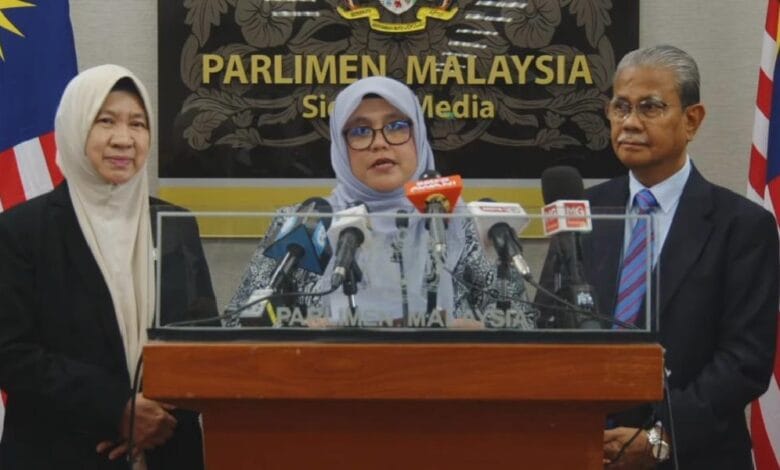
PAC chairman Datuk Mas Ermieyati Samsudin said the committee views the development with serious concern, particularly because Malaysia had already fulfilled a substantial portion of its contractual payment obligations for the defence procurement.
According to her, the cancellation raises important questions regarding financial accountability, contractual commitments and the broader implications for national defence readiness.
“The committee believes every available diplomatic and legal avenue should be pursued to secure a fair resolution and protect Malaysia’s interests.
“The government must ensure that all rights provided under the agreed contractual terms are fully enforced,” she said in a statement.
PAC noted that the issue is particularly significant given the high percentage of payments reportedly made under the contract before the export licence was withdrawn.
The committee stressed that any losses suffered by the government should be carefully assessed to determine the most appropriate course of action, including compensation claims where applicable.
Mas Ermieyati said protecting public funds must remain a priority, especially in large-scale defence acquisitions involving strategic national assets.
Beyond the financial implications, PAC also highlighted potential risks to the implementation timeline of the Littoral Combat Ship programme.
The committee warned that delays in securing key weapons systems could affect the operational capabilities originally planned for the vessels once they enter service.
“PAC hopes the government will continue closely monitoring the project’s implementation to ensure that the Littoral Combat Ships are delivered according to schedule and equipped with the full range of intended defence systems,” she said.
The controversy emerged after Norway reportedly cancelled the export licence for NSM anti-ship missiles and associated launcher systems that were designated for Malaysia’s naval programme.
Norwegian authorities cited national security considerations in their decision, resulting in the suspension of the planned delivery.
Earlier, Defence Minister Datuk Seri Mohamed Khaled Nordin confirmed that Malaysia would proceed with legal action against the Norway-based supplier following the failure to deliver the contracted missile systems.
He maintained that the legal process would continue despite an apology reportedly conveyed by Norwegian authorities regarding the export licence cancellation.
PAC said the incident underscores the importance of strengthening risk management mechanisms in future defence procurement arrangements, particularly those involving foreign suppliers and export-controlled technologies.
According to the committee, greater contractual safeguards may be necessary to minimise exposure to geopolitical decisions that could affect strategic acquisitions after agreements have already been signed.
The NSM is a modern anti-ship missile system designed for long-range maritime strike operations and is capable of engaging targets at distances exceeding 300 kilometres.
The missile forms part of the planned combat package for Malaysia’s Littoral Combat Ships, which are expected to play a significant role in enhancing the Royal Malaysian Navy’s operational capabilities.
PAC stressed that any issue affecting strategic defence assets must be addressed decisively to ensure public funds are protected and national security objectives remain on track.
The committee added that the outcome of ongoing negotiations and legal proceedings will be closely watched as Malaysia seeks to secure both financial redress and a satisfactory resolution to the procurement dispute.