
Spinal Resources Secures Second US Patent for AI-Driven Spinal Rod Technology

Multi-Diameter Implant System Designed to Improve Stability and Reduce Surgical Complications
FORT LAUDERDALE, Florida — Spinal Resources Inc. has announced the issuance of its second United States patent covering a multi-diameter spinal fixation rod technology designed to improve implant stability and support personalised spinal treatment.
The newly granted U.S. Patent No. 12,611,231 titled “Spinal Rod and Systems Thereof” expands the company’s intellectual property protection following the earlier issuance of U.S. Patent No. 12,251,133 in March 2025.
According to the company, the two patents together establish a layered intellectual property position covering rod design, implant systems and artificial intelligence-driven development methodologies.
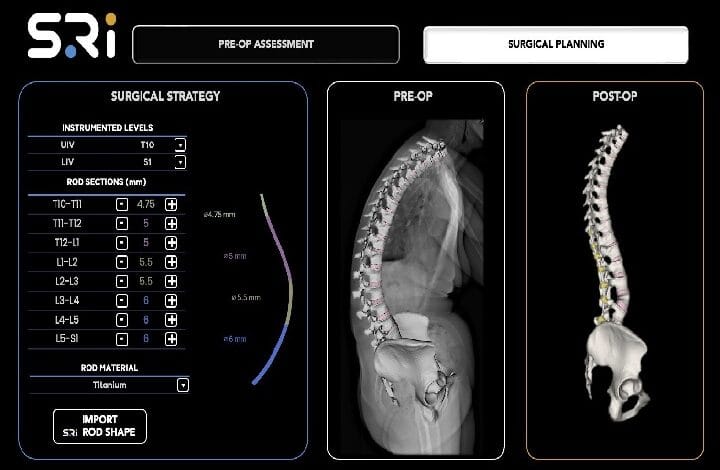
Spinal Resources said the technology enables spinal rods to be individually customised based on patient anatomy and clinical requirements through the use of AI and post-operative outcome data.
According to the company, conventional spinal fixation rods typically maintain a constant diameter throughout the structure, creating a uniform stiffness profile across the spine.
The approach is considered less effective because spinal anatomy and bone density differ significantly across various spinal segments.
Spinal Resources explained that older stepped-diameter rod systems often created mechanical stress concentration points while also limiting flexibility for screw placement during surgical procedures.
To overcome those limitations, the company developed a new rod design using smooth Bézier curve geometry, enabling gradual and continuous diameter transitions along the rod structure.
The technology allows stiffness levels to be adjusted across different spinal segments in order to improve implant stability while reducing stress on surrounding bone structures.
According to Spinal Resources, combining variable-stiffness rods with AI-driven surgical planning systems and post-operative outcome databases allows implant designs to be tailored more accurately to individual patient profiles.
The company said the system is intended to reduce complications including proximal junction kyphosis (PJK), proximal junction failure (PJF), implant loosening and excessive stress shielding on bone structures.
In addition, the latest patent independently protects the rod design itself without relying on specific fastening systems.
According to the company, the expanded protection also includes advanced geometric features such as morphotype-based rod contour designs that were not covered in the earlier patent.
Spinal Resources chief executive officer Bernie Bedor said the combined patents significantly strengthen the company’s strategic and commercial position within the medical technology sector.
He said the broader intellectual property protection will help accelerate commercial expansion while reinforcing the company’s standing in the modern implant technology market.
According to him, the latest development also creates opportunities for future strategic partnerships with healthcare organisations and industry collaborators.
In recent years, artificial intelligence has become increasingly important in medical technology development, particularly in areas involving smart implants, surgical planning and personalised treatment systems.
The development reflects the healthcare industry’s growing focus on intelligent technologies designed to improve treatment precision and reduce post-surgical complications.
-wilayah.com.my