
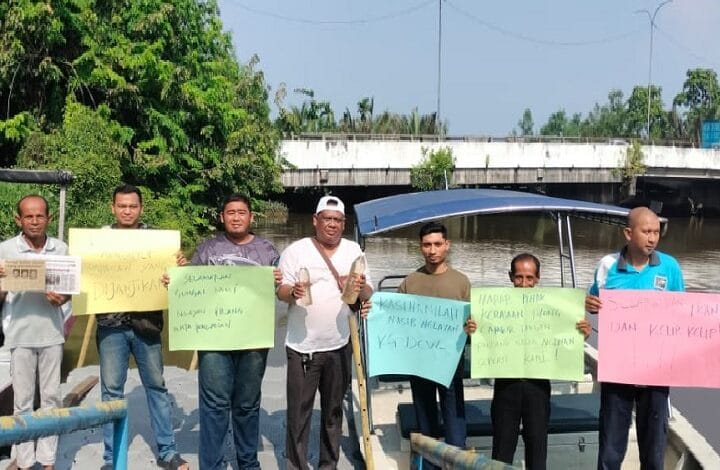
River pollution disrupts livelihoods of more than 100 fishermen in Perak’s Kampung Dew

TAIPING: More than 100 fishermen in Kampung Dew are facing significant income losses after pollution in Sungai Sepetang severely affected fish stocks and disrupted river-based economic activities that support the local community.
The pollution is believed to have originated from a breached wastewater retention pond at a nearby palm oil mill, allowing large quantities of dark industrial effluent to flow into the river over the past two weeks.
Local fishing representatives said the incident has not only reduced catches but has also impacted eco-tourism activities that depend on the river’s environmental health, including firefly tours and freshwater prawn fishing.
Kampung Dew Fisheries Community (MyKP) chairman Shukor Ishak said residents first became aware of the pollution after receiving reports from the area before carrying out their own inspection of the affected stretch of the river.
According to him, investigators observed dark-coloured water and strong odours, with the pollution believed to have originated from a damaged wastewater storage pond at a palm oil processing facility.
He said the contamination has resulted in the deaths of more than two tonnes of fish, raising concerns over the ecological impact on one of the area’s key river systems.
The incident has forced many fishermen to suspend their usual activities because fish and freshwater prawns have become increasingly difficult to find within their traditional fishing grounds.
Before the pollution occurred, many fishermen were able to earn at least RM200 a day, but Shukor said they are now travelling much farther towards the river estuary in search of catches that continue to decline.
The longer journeys have increased fuel consumption and operating costs, leaving many fishermen spending more while bringing home significantly smaller catches.
He said the situation has become especially challenging for families that rely almost entirely on river fishing as their primary source of income.
In addition to commercial fishing, operators offering recreational freshwater prawn fishing trips have also temporarily suspended services due to deteriorating river conditions.
The disruption has created further economic losses for businesses linked to tourism, with concerns that prolonged pollution could discourage visitors from returning to the area.
Shukor urged the Perak state government, the Department of Environment (DOE), the Department of Irrigation and Drainage (DID) and other relevant agencies to conduct comprehensive inspections of wastewater retention ponds at palm oil mills throughout the area.
He said stronger monitoring and stricter enforcement are necessary to ensure industrial waste storage facilities comply with safety requirements and to prevent similar environmental incidents from recurring.
According to Shukor, a report has already been lodged with the Department of Environment, which has informed the community that investigations are underway.
He added that the case is expected to proceed through legal channels as authorities continue gathering evidence to determine responsibility for the pollution.
The incident has renewed calls for greater oversight of industrial waste management practices, with local communities stressing that protecting river ecosystems is essential not only for environmental sustainability but also for safeguarding the livelihoods of those who depend on the waterways for fishing, tourism and other economic activities.