
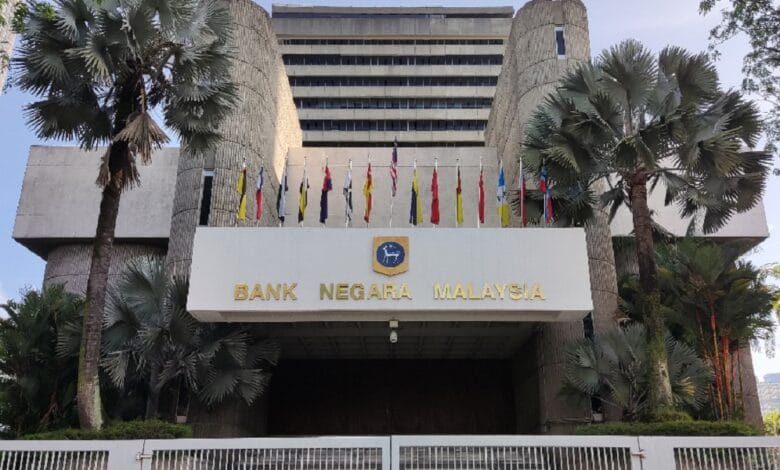
BNM Adopts Multi-Scenario Approach as Middle East Conflict Clouds Economic Outlook

KUALA LUMPUR — Escalating tensions in West Asia are adding further uncertainty to the global economic landscape, prompting Malaysia’s central bank to adopt a multi-scenario strategy to navigate potential risks.
Bank Negara Malaysia acknowledged that the current environment has made economic forecasting increasingly complex, with projections subject to rapid changes driven by geopolitical developments.
Deputy Governor Marzunisham Omar said the central bank has developed several scenarios, including alternative outlooks that factor in key uncertainties such as the duration of the conflict, global oil price trends, damage to energy infrastructure and possible supply chain disruptions.
Global Growth Outlook Remains Resilient
Despite these challenges, global economic growth is still projected to range between 2.7 and 3.2 per cent this year, supported by ongoing monetary and fiscal measures in major economies.
However, the outlook remains highly dependent on geopolitical stability and the ability of global markets to absorb supply shocks.
Beyond Energy: Broader Economic Impact
Chief Economist of Maybank Investment Bank Suhaimi Ilias noted that the crisis extends beyond the energy sector, affecting a wide range of economic activities.
He pointed out that even if tensions ease, the recovery of crude oil production may take time, particularly if infrastructure and logistics networks remain disrupted.
He also highlighted the strategic importance of key trade routes such as the Strait of Hormuz, which plays a critical role in global energy transportation.
Supply Shocks and Secondary Effects
Meanwhile, economist Nur Ain Shahrier explained that the crisis is already triggering supply-side shocks, including higher oil prices and disruptions in production chains.
While these represent immediate or first-round effects, she warned that prolonged disruptions could lead to second-round impacts, influencing consumer behaviour and investment decisions, thereby exerting broader pressure on economic growth.
Preparedness Through Strategic Planning
BNM emphasised that it remains vigilant and ready to adjust its policy stance as needed, using scenario-based planning to respond to evolving conditions.
This proactive approach aims to ensure that Malaysia’s economy remains resilient and adaptable amid an increasingly volatile global environment.
-wilayah.com.my