MAPIM Urges Comprehensive National Plan to Restore Malay Reserve Land and Safeguard Future Bumiputera Ownership

PETALING JAYA: The government should introduce a comprehensive national strategy to restore the shrinking area of Malay Reserve Land (MRL), ensuring that land designated to protect Malay and Bumiputera ownership is preserved and strengthened for future generations, according to the Malaysian Consultative Council of Islamic Organisations (MAPIM).
The call follows Prime Minister Datuk Seri Anwar Ibrahim’s recent announcement that 50 acres within Bandar Malaysia will be gazetted as Malay Reserve Land, a move welcomed as a positive step towards reinforcing constitutional protections for Malay land ownership.
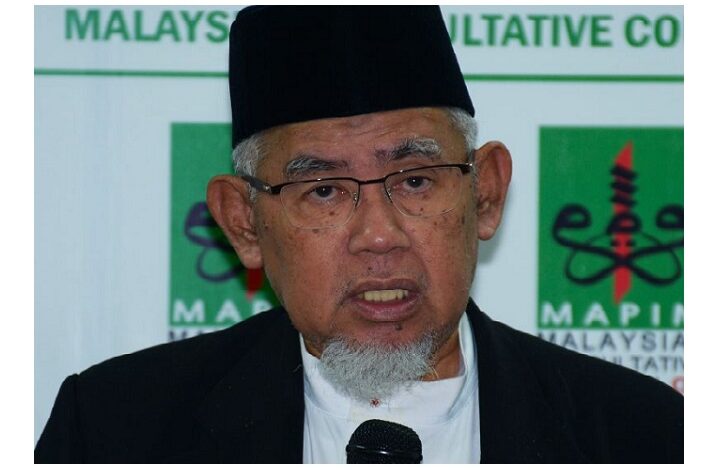
MAPIM president Mohd Azmi Abdul Hamid said the decision demonstrates the government’s willingness to uphold provisions relating to Malay Reserve Land under the Federal Constitution and existing legislation.
However, he stressed that the latest gazettement should be viewed as the beginning of a broader national effort rather than a complete solution to decades of declining Malay Reserve Land.
According to Mohd Azmi, the continuous reduction of Malay Reserve Land has significant long-term implications, not only for land ownership but also for the economic resilience and socio-economic advancement of the Malay and Bumiputera communities.
He said Malay Reserve Land serves as a strategic national asset that protects long-term ownership of land while providing future generations with opportunities for economic development and wealth creation.
“The recent announcement is encouraging, but it should lead to wider reforms. Restoring Malay Reserve Land requires long-term planning, systematic implementation and sustained political commitment rather than isolated initiatives,” he said in a statement.
Mohd Azmi proposed that the government undertake a nationwide audit of all Malay Reserve Land to establish accurate records of its original size, current coverage and areas that have lost their protected status over the years.
He said reliable data would enable policymakers to formulate evidence-based strategies to restore and preserve Malay Reserve Land more effectively.
He also called for previously degazetted land to be reinstated wherever legally possible or replaced with alternative land of equivalent size and value in accordance with existing legal requirements.
According to him, any future reduction in Malay Reserve Land should only occur through transparent procedures that guarantee fair and equivalent replacement.
Mohd Azmi further urged the government to formulate a long-term national blueprint aimed not merely at maintaining existing reserves but progressively increasing the total area of Malay Reserve Land where appropriate.
He said stronger governance mechanisms are equally important to ensure consistent implementation across all states.
Among the measures proposed is the establishment of a dedicated monitoring committee comprising representatives from state governments, legal experts, academics, professional bodies and civil society organisations.
Such a body, he said, would strengthen oversight, improve transparency and provide independent input into policies affecting Malay Reserve Land.
Mohd Azmi also encouraged every state government to treat the preservation of Malay Reserve Land as a national responsibility that transcends political differences, noting that once strategically located land is lost, replacing it becomes increasingly difficult and costly.
He stressed that every decision concerning Malay Reserve Land should balance economic development with the constitutional objective of safeguarding long-term Bumiputera land ownership.
MAPIM and TERAS Pengupayaan Melayu, he added, will continue monitoring government policies relating to Malay Reserve Land while remaining ready to collaborate with relevant stakeholders in developing practical and sustainable solutions.
He said protecting Malay Reserve Land is ultimately about more than land administration, as it represents an important commitment to preserving constitutional rights, strengthening socio-economic resilience and securing the long-term interests of future Malay and Bumiputera generations.