
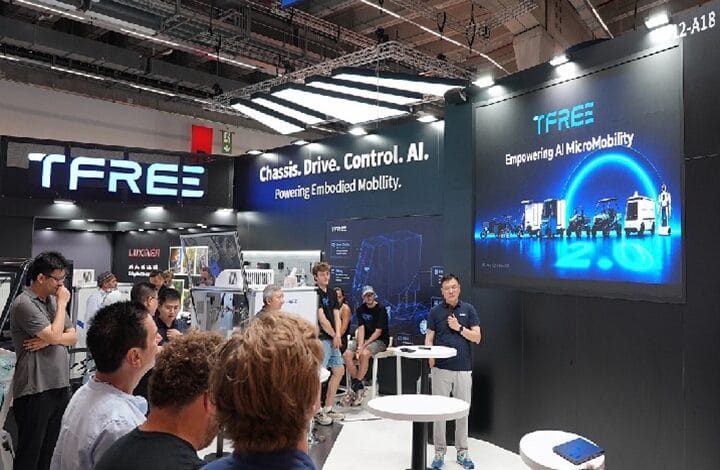
TFREE Debuts AI Micro Mobility 2.0 Platform to Transform Smart Mobility and Last-Mile Logistics

FRANKFURT: Smart mobility technology company TFREE has officially introduced its global brand strategy at EUROBIKE 2026, unveiling a new AI Micro Mobility 2.0 platform designed to redefine how low-speed transportation, autonomous delivery and last-mile logistics are managed through an integrated artificial intelligence ecosystem.
Rather than positioning itself solely as a vehicle manufacturer, TFREE said its long-term vision is to develop the digital operating system that connects vehicles, fleet operators, infrastructure and intelligent software into a unified mobility platform.
The company believes the future of micromobility will depend not only on advanced electric vehicles but also on intelligent software capable of coordinating large fleets, predictive maintenance and real-time operational decision-making.
TFREE’s platform builds upon more than a decade of manufacturing expertise from its parent company, LUXMEA, which has supplied over 400,000 electric bicycles certified under the EN15194 standard and more than 150,000 commercial cargo vehicles compliant with EN17860 and DIN EN17860 requirements.
According to the company, the new platform is structured around three core technological pillars: the Universal Chassis Platform, Intelligent Vehicle Control and Software & Ecosystem Services.
These capabilities are integrated through a Software-Defined Vehicle (SDV) architecture that supports 4G IoT connectivity, full Over-the-Air software updates, AI-powered predictive maintenance and open application programming interfaces (APIs) for third-party integration.
TFREE said the combination enables fleet operators to manage vehicles, infrastructure and operational workflows more efficiently while improving reliability and reducing maintenance costs.
The company is also expanding its artificial intelligence ecosystem through collaborations with several technology partners, including the Yancheng CAS-HT Computing Research Institute, autonomous delivery specialist Neolix and embodied AI robotics developer Galbot.
These partnerships will focus on commercialising advanced computing, digital twin technology, autonomous delivery systems and intelligent robotics for low-speed transportation environments.
Within Europe, TFREE has already begun pilot projects with fleet operators in Germany and Belgium to evaluate intelligent fleet management, digital charging infrastructure and multi-scenario mobility services based on its Universal Chassis Platform.
The company noted that its technology has been engineered to comply with major European regulatory frameworks, including GDPR, CE certification, ISO standards, the EU Battery Passport initiative and DIN EN17860 specifications.
Meeting these standards is expected to strengthen confidence among municipalities, enterprise customers and large commercial fleet operators seeking reliable long-term technology partners.
Looking ahead, TFREE plans to deepen cooperation with original equipment manufacturers (OEMs), logistics providers, autonomous driving companies, robotics developers and smart city stakeholders to establish next-generation standards for intelligent low-speed mobility.
By combining AI, cloud-native software, connected vehicles and open digital ecosystems, the company aims to accelerate the global transition toward safer, smarter and more sustainable urban transportation while supporting the rapid expansion of autonomous logistics and micromobility services.