CHINT Showcases Smart Grid and Sustainable Energy Technologies to Support Africa’s Industrial Growth

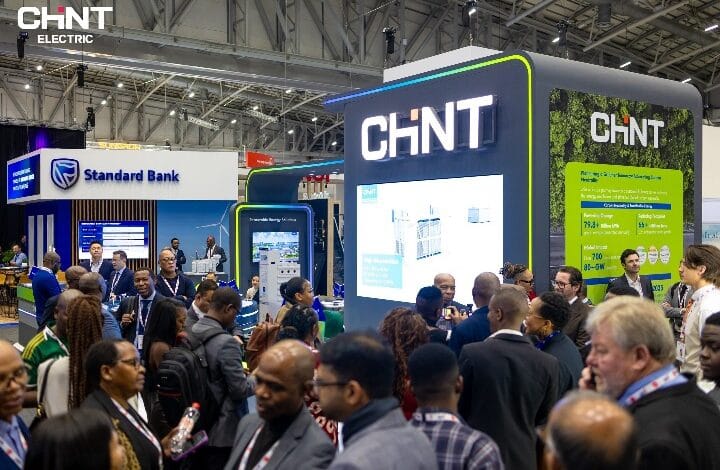
CAPE TOWN, South Africa: CHINT reaffirmed its commitment to supporting Africa’s energy transition by unveiling an extensive portfolio of smart, sustainable and cost-effective power solutions during the Africa Energy Forum (AEF) 2026, highlighting technologies designed to strengthen electricity infrastructure and accelerate industrial development across the continent.
Operating under the theme “Smart, Sustainable and Affordable Energy Solutions for Africa’s Industrial Leap,” the company demonstrated integrated solutions covering electricity transmission, power distribution, renewable energy generation, energy storage and intelligent grid management to address the region’s rapidly growing demand for reliable electricity.
Among the technologies showcased were CHINT’s 1,000-kilovolt power transformer and its 24-kilovolt SF6-free Ring Main Unit (RMU), both developed to improve transmission efficiency while supporting environmentally responsible power infrastructure through reduced greenhouse gas emissions.
According to the company, reliable energy infrastructure remains one of the most important foundations for industrial expansion, economic competitiveness and sustainable development as African countries continue investing in modern electricity networks.
CHINT said its integrated energy portfolio is intended to provide utilities, industrial operators and project developers with practical technologies capable of supporting both increasing electricity demand and long-term decarbonisation objectives.
The company also highlighted its Smart Grid Solutions, which combine advanced electrical equipment with intelligent network technologies to improve transmission performance, strengthen distribution systems and facilitate greater integration of renewable energy into existing power grids.
CHINT noted that many electricity networks across Africa continue to experience operational challenges resulting from ageing infrastructure, rising electricity consumption and slower fault detection, all of which can reduce grid reliability and operational efficiency.
To address these issues, the company promoted its latest natural ester transformer technology as a safer and more sustainable alternative to conventional mineral oil transformers.
Unlike traditional transformer oil, the biodegradable natural ester insulating fluid decomposes by more than 95 per cent if leakage occurs, significantly reducing environmental impact.
The technology also provides improved fire protection through a flash point exceeding 300 degrees Celsius, compared with approximately 150 degrees Celsius for conventional mineral oil, thereby lowering operational risks and reducing the need for additional fire suppression systems.
CHINT added that the natural ester transformer delivers up to a 98 per cent reduction in lifetime carbon emissions compared with conventional transformer technologies, supporting utilities seeking to meet sustainability targets while modernising ageing infrastructure.
The solution has already been deployed in several international markets, including Europe, North America, Latin America and Australia.
Across Africa, the company has expanded deployment of its smart RMU technology in countries such as Algeria, Nigeria, Uganda, Tanzania, Kenya and Namibia, helping strengthen electricity distribution networks and improve grid resilience.
Thomas Cheng, General Manager of CHINT West Asia and Africa, said the continent’s industrial future depends heavily on reliable energy infrastructure supported by long-term collaboration between governments, utilities and technology providers.
He said CHINT intends to contribute to Africa’s transformation by combining innovation, advanced engineering and local partnerships to deliver practical energy solutions that support industries, improve community development and enhance long-term energy security.
Through its latest technologies and continued regional investments, CHINT aims to play a larger role in helping African countries build more resilient electricity networks while advancing cleaner, safer and more sustainable energy systems capable of supporting future economic growth.