
Malaysia’s Digital Future Will Be Shaped by Trust, Not Just Innovation

KUALA LUMPUR — As Malaysia advances its digital ambitions, a defining reality is emerging: the future of its digital ecosystem will depend less on innovation and more on trust.
While significant progress has been made in building digital infrastructure, the real challenge lies in ensuring that people feel confident enough to use these systems.
Discussions involving policymakers, cybersecurity experts and industry leaders highlight a shared understanding — digitalisation without trust is inherently fragile.
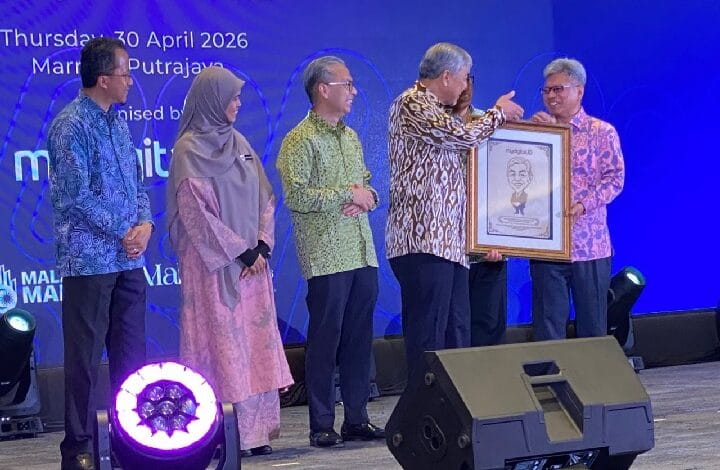
Deputy Prime Minister Ahmad Zahid Hamidi emphasised that digital platforms now underpin essential aspects of daily life, from financial transactions to public services.
However, this reliance also introduces new vulnerabilities.
In an open and interconnected digital environment, threats are evolving rapidly and becoming increasingly difficult to detect.
Malaysia recorded more than 60,000 cybercrime cases in 2025, with losses approaching RM3 billion. Yet these figures only reflect part of a broader transformation.
The nature of cyber threats is changing.
Cybercriminals are shifting their focus from exploiting system vulnerabilities to manipulating human behaviour.
Through phishing, impersonation and social engineering, attackers leverage trust, urgency and fear to achieve their objectives.
According to the National Cyber Security Agency, traditional approaches focused on infrastructure protection are no longer sufficient. The priority must shift toward protecting identity and user confidence.
At the core of this challenge is identity verification.
Many digital risks stem from the inability to accurately confirm identities in online interactions.
This is where MyDigital ID becomes strategically important. CEO Nik Hisham Nik Ibrahim described it as a secure bridge connecting individuals to digital services.
However, trust cannot be created instantly.
It must be built through consistent, reliable experiences.
Chairman Raja Nushirwan Zainal Abidin noted that a system becomes true infrastructure only when it is used instinctively and without hesitation.
Malaysia now faces a critical balance between security and inclusivity.
Excessive restrictions may limit access and slow innovation, while insufficient safeguards increase exposure to fraud.
The emerging approach focuses on integrating security into system design from the outset.
A unified “one key” digital identity model is also gaining traction, aiming to simplify access while strengthening security.
Importantly, trust must be built collectively.
It requires coordination across government, financial institutions, telecommunications providers and private sector platforms.
The recent collaboration involving 29 organisations reflects a move toward a more integrated digital ecosystem.
Ultimately, Malaysia’s digital future will not be defined by how advanced its systems are.
It will be defined by how much people trust them.
In the digital age, trust is no longer optional — it is essential.
-wilayah.com.my