Unified ASEAN Policies Could Boost Investment and Strengthen Regional Markets

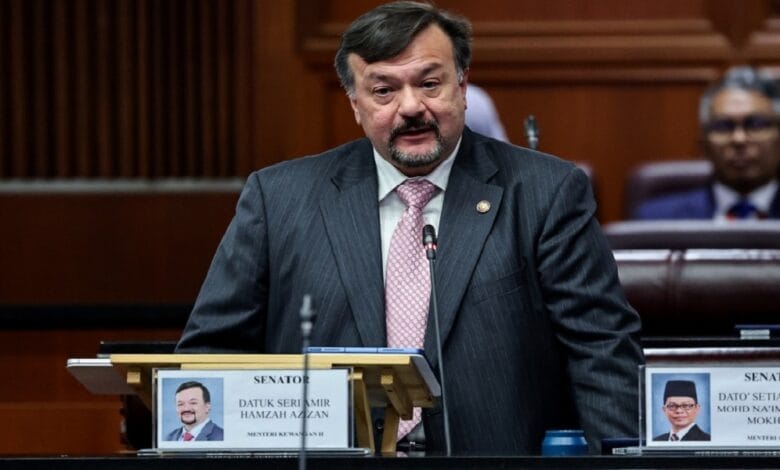
KUALA LUMPUR – Stronger policy coordination and deeper cooperation among Southeast Asian nations could significantly enhance the attractiveness of ASEAN markets to global investors, according to Malaysia’s Finance Minister II Datuk Seri Amir Hamzah Azizan.
He said that aligning economic frameworks and regulatory mechanisms across the region would allow ASEAN to function more effectively as a single integrated market rather than a collection of independent economies.
Such integration, he explained, could strengthen investor confidence and provide a more stable foundation for the region’s long-term economic growth.
Speaking during the high-level roundtable session titled Policy Challenges for Asia Going Forward held alongside the Asia in 2050 Conference in Bangkok, Amir Hamzah highlighted the importance of adopting common policy standards across ASEAN member states.
Among the key areas where alignment could make a significant impact are emissions measurement systems, policy intervention tools and climate-related economic taxonomies.
According to him, harmonising these frameworks would help make financial markets within the region more fluid and interconnected.
“When markets across ASEAN operate under more consistent policies and frameworks, the region becomes easier for investors to navigate. This strengthens the perception of ASEAN as a unified economic bloc,” he said.
The minister noted that greater consistency in policy frameworks could encourage international capital to flow more easily into the region, thereby supporting long-term development and economic stability.
ASEAN, he pointed out, is home to approximately 700 million people, making it one of the largest and most dynamic economic regions in the world.
With its large population, expanding middle class and growing digital economy, the region holds enormous potential for economic expansion in the coming decades.
However, Amir Hamzah emphasised that achieving deeper economic integration requires ASEAN member states to focus on areas where consensus can be easily achieved.
By prioritising initiatives that are mutually beneficial and non-controversial, ASEAN countries can accelerate regional cooperation without being hindered by political or regulatory differences.
He cited the ASEAN Power Grid initiative as an example of a project that offers clear advantages for all participating countries.
The regional energy network aims to enhance energy security, improve electricity sharing across borders and promote more efficient use of resources.
Such initiatives demonstrate how regional cooperation can create win-win outcomes for member states while strengthening ASEAN’s overall economic resilience.
Amir Hamzah also highlighted bilateral cooperation between Malaysia and Singapore through the Johor-Singapore Special Economic Zone (JS-SEZ).
The project, he said, illustrates how neighbouring countries can combine their economic strengths to achieve greater outcomes than they could individually.
Through strategic collaboration, Malaysia and Singapore aim to create a powerful economic corridor that could attract high-value investments and boost regional economic activity.
“And when cooperation begins between two countries, it can expand into broader cooperation across ASEAN. That is how we grow stronger together as a region,” he said.
Amir Hamzah stressed that stronger regional integration and consistent economic policies could position ASEAN as one of the world’s most competitive investment destinations in the coming decades.
With the right frameworks in place, he added, ASEAN could emerge as a unified economic force capable of attracting sustained global investment while ensuring long-term stability and growth for its member economies.
-wilayah.com.my