MOSTI to Focus on Future Talent and Emerging Technologies as Malaysia Prepares for ASEAN STI Summit

JOHOR BAHRU, July 3 — Building a highly skilled talent pipeline and accelerating the adoption of emerging technologies will be among the Ministry of Science, Technology and Innovation’s (MOSTI) top priorities as Malaysia gears up to host the 23rd ASEAN Ministerial Meeting on Science, Technology and Innovation (AMMSTI-23) in 2027.
Science, Technology and Innovation Minister Datuk Chang Lih Kang said developing a future-ready workforce is essential to strengthening Malaysia’s competitiveness and supporting the country’s efforts to attract more high-value and technology-driven investments.
He said talent development would remain the ministry’s primary focus, alongside several strategic technology areas that are expected to shape the country’s long-term economic and industrial transformation.
Among the sectors identified by MOSTI are energy transition, artificial intelligence (AI), digitalisation, advanced materials, nanotechnology, hydrogen technology and biotechnology.
Chang said these areas will continue to receive significant attention as Malaysia prepares to assume a leading regional role in science, technology and innovation through its hosting of AMMSTI-23.
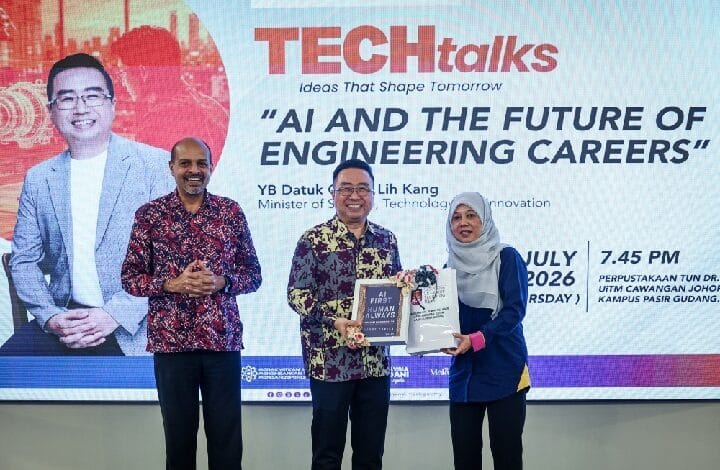
He spoke to reporters after attending the MOSTI TechTalks Series 2/2026 programme, themed AI and the Future of Engineering Careers, at the Tun Dr Ismail Library of Universiti Teknologi MARA (UiTM) Johor Branch’s Pasir Gudang Campus.
Malaysia is scheduled to host the 23rd ASEAN Ministerial Meeting on Science, Technology and Innovation in June next year following the decision reached during the 22nd AMMSTI held in Vientiane, Laos, on June 26.
Separately, Chang reaffirmed MOSTI’s commitment to supporting national efforts to strengthen Technical and Vocational Education and Training (TVET), although responsibility for the sector lies with other ministries.
He said the ministry would continue working closely with agencies responsible for TVET to ensure training programmes evolve in line with technological developments and industry requirements.
According to Chang, TVET institutions should broaden their curriculum beyond conventional technical competencies by incorporating subjects such as robotics, artificial intelligence and computer coding to better equip graduates for future employment opportunities.
He added that improving TVET requires close coordination among the 12 ministries involved in implementing technical and vocational education nationwide.
These include the Ministry of Education, the Ministry of Higher Education, the Ministry of Rural and Regional Development, and the Ministry of Human Resources, among others responsible for various aspects of TVET delivery.
Chang said collaboration across government agencies is essential to producing graduates with skills that remain relevant as industries undergo rapid technological transformation.
He also highlighted the importance of direct engagement with university students through initiatives such as MOSTI TechTalks, which are organised regularly at higher education institutions across the country.
According to him, the programme provides an opportunity for students to gain first-hand exposure to developments within Malaysia’s science, technology and innovation ecosystem while encouraging greater interest in future-oriented industries.
Chang said these engagements also help students better understand the government’s strategic direction in science, technology and innovation, allowing them to prepare more effectively for careers in an increasingly technology-driven economy.
He added that nurturing highly skilled local talent remains one of the key foundations for ensuring Malaysia can sustain innovation, enhance industrial competitiveness and strengthen its position as a regional hub for advanced technology and high-value investments.