Malaysia and Uzbekistan Deepen Agricultural Cooperation with Focus on Smart Farming and Food Security

PETALING JAYA: Malaysia and Uzbekistan have agreed to strengthen strategic cooperation in agriculture and agro-food industries, with both countries placing greater emphasis on research, innovation, smart farming technologies and investment opportunities aimed at enhancing food security and long-term sustainability.
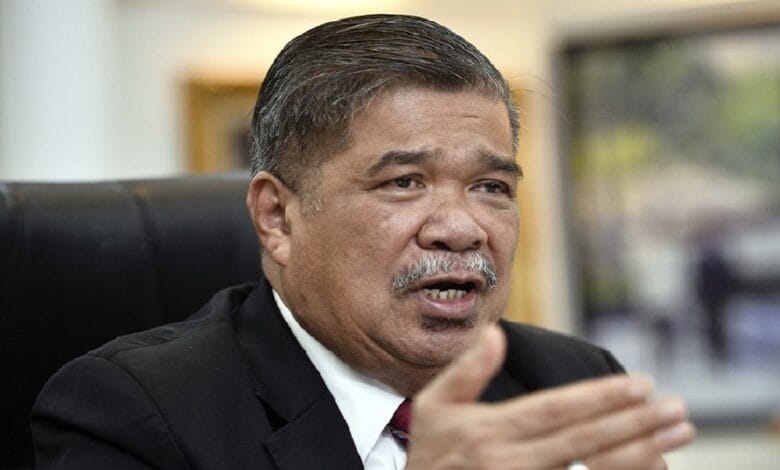
The agreement was reached during a bilateral meeting between Malaysia’s Minister of Agriculture and Food Security, Datuk Seri Mohamad Sabu, and Uzbekistan’s Minister of Agriculture, Ibrokhim Abdurakhmonov, in Tashkent yesterday.
Mohamad said the discussions centred on several priority areas, including climate change adaptation, research and development (R&D), food security initiatives and the adoption of advanced technologies to improve agricultural productivity.
According to him, both nations recognised the importance of innovation and digital transformation in ensuring that agriculture remains resilient and competitive in the face of evolving global challenges.
“Malaysia and Uzbekistan share the view that technology and innovation should become the main drivers of agricultural development in the future.
“Areas such as artificial intelligence, digital agriculture, smart farming and sustainable water management have been identified as promising sectors for future collaboration,” he said in a statement today.
Mohamad noted that aquaculture and fisheries emerged as another key area of cooperation.
Malaysia, he said, is prepared to share its expertise in aquaculture production, seafood processing and quality control systems, particularly in the shrimp farming industry where the country has accumulated extensive experience.
He added that Malaysia also introduced Uzbekistan to its successful implementation of biofloc technology, an innovative aquaculture system that enables higher productivity even within limited farming spaces.
“Uzbekistan has expressed strong interest in acquiring Malaysian expertise, technology and investment in order to strengthen the development of its fisheries and aquaculture sectors.
“This opens up significant opportunities for collaboration between industry players from both countries,” he said.
The minister said Uzbekistan’s experience in managing agriculture under dry climate conditions could complement Malaysia’s strengths in agricultural technologies and agro-food innovations.
He believes the combination of expertise from both countries could create valuable synergies and contribute to the sustainable growth of their agricultural sectors.
To facilitate future cooperation, Malaysia and Uzbekistan have agreed to establish a joint committee to explore investment and trade opportunities in agriculture and agro-food industries.
Mohamad said cooperation between companies and agricultural industry players from both countries would also be enhanced to complement the strong government-to-government relationship.
In another development, he welcomed the progress made between the Malaysian Agricultural Research and Development Institute (MARDI) and Uzbekistan’s Centre of Knowledge and Innovation in Agriculture (AKIS).
The two institutions are currently finalising a Memorandum of Understanding (MoU) that is expected to pave the way for joint research projects, scientist exchange programmes and the development of new agricultural technologies.
“This collaboration will strengthen research capabilities and help improve productivity as well as competitiveness in the agro-food sector for both countries,” he said.
As part of his official visit, Mohamad also officiated the launch of Malaysian agricultural technology company Meraque Group’s operations in Uzbekistan.
The company, which specialises in robotics, drones and precision agriculture technologies, signed an MoU with Uzbekistan’s Ministry of Agriculture to expand cooperation in agricultural technology applications.
Mohamad described the expansion as a significant milestone for Malaysian companies entering the Central Asian market.
“It demonstrates that Malaysian agricultural technology has the capability to compete internationally and become a trusted partner in global agricultural development,” he said.
Trade between Malaysia and Uzbekistan has continued to grow steadily, with the value of agricultural and agro-food trade reaching RM338.48 million between January and December last year.
Malaysia’s key exports to Uzbekistan include coffee, cocoa, tea, spices and processed food products, while imports from Uzbekistan consist mainly of high-value fruits such as grapes.
Mohamad also extended an official invitation to Uzbekistan to participate in the Malaysia Agriculture, Horticulture and Agrotourism Exhibition (MAHA) 2026, scheduled to take place from August 28 to September 6.
He is also expected to attend the Tashkent International Investment Forum (TIIF) 2026, which will be officiated by Uzbekistan President Shavkat Mirziyoyev on June 17.