
Inside Malaysia’s Rare Earth Hub Supplying Critical Minerals Worth RM395,000 Per Bag

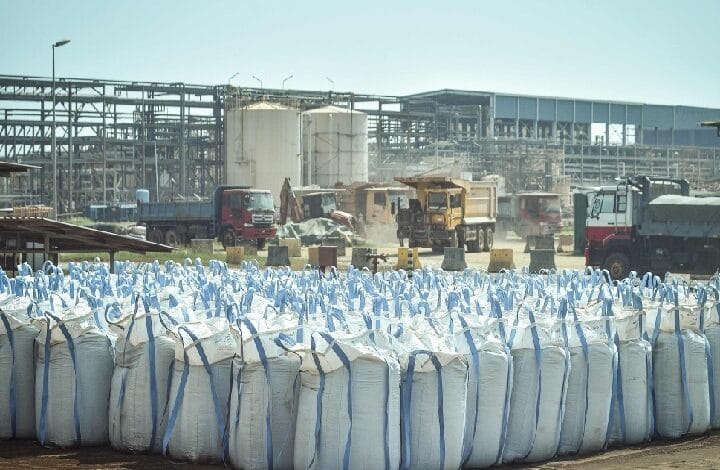
GEBENG: Deep within Malaysia’s industrial corridor in Pahang, a key facility is quietly playing a pivotal role in the global race for critical minerals, with bags of processed rare earth elements valued at around RM395,000 each being shipped to international markets.
At the refinery operated by Lynas Malaysia in Gebeng near Kuantan, workers load tonnes of refined materials destined for export, as demand surges for these essential components used in everything from smartphones to electric vehicles and advanced military systems.
This dominance has driven efforts by other players, including Australian mining giant Lynas Corporation, to expand operations and reduce reliance on a single supplier. The company’s Malaysian facility now accounts for about 10 per cent of global rare earth processing capacity.
Chief executive Amanda Lacaze said competing with China requires sustained effort and long-term planning, noting that Beijing’s success stems from a clear industrial strategy developed over decades.
The Gebeng plant, operational since 2012, refines raw materials sourced from Western Australia through a complex separation process. It currently processes 11 out of the 17 rare earth elements, with plans to expand into heavier elements such as yttrium and lutetium, which are used in applications like lasers, medical imaging and cancer treatment.
Most of the output consists of neodymium-praseodymium (NdPr), a key material for high-strength magnets, with each bag fetching approximately US$100,000 (RM395,000). Smaller quantities of other rare earth oxides, including dysprosium and terbium, are packaged separately in smaller containers.
From the refinery, the materials are transported across Malaysia to Port Klang before being shipped to markets such as Japan, where they are further processed into components for electronics, automotive and aerospace industries.
The strategic importance of rare earths has been underscored by ongoing global trade tensions, particularly between the United States and China, where export restrictions and supply concerns have disrupted markets and supply chains.
Industry leaders say the challenge is no longer just extraction or processing, but developing downstream capabilities — converting raw materials into finished products. Lynas chief operating officer Pol Le Roux noted that this segment remains underdeveloped outside China.
While the company is working with manufacturers to bridge this gap, Lacaze stressed that expanding into full-scale magnet production would require careful planning and investment.
Environmental concerns remain a key issue in rare earth production, as the process involves chemical-intensive operations that can generate hazardous by-products. Past cases in the region have raised alarms over pollution and waste management.
Lynas recently secured approval from the Malaysian government to continue operations for another 10 years, although it must phase out activities generating radioactive waste within five years under updated licensing conditions.
The company maintains that its by-products are safely managed and that materials stored in disposal facilities do not pose environmental risks.
Looking ahead, Lynas is exploring opportunities to diversify into catalyst production, particularly for hydrogen supply chains, where rare earths play a role in energy conversion processes.
Industry observers believe Malaysia’s position in the rare earth value chain could become increasingly significant as global demand continues to rise, especially in clean energy and advanced technologies.
-wilayah.com.my