Adat Perpatih takes centre stage as Negeri Sembilan election unfolds amid royal institution dispute

KUALA LUMPUR: As Negeri Sembilan prepares for its upcoming state election, public attention is not only focused on political contests but also on a rare constitutional issue involving the state’s centuries-old royal traditions and the unique system of governance shaped by Adat Perpatih.
The election, which will determine the composition of the 36-seat Negeri Sembilan State Legislative Assembly, takes place against the backdrop of a dispute involving the state’s traditional institutions, making the state’s distinctive royal structure a key subject of discussion.
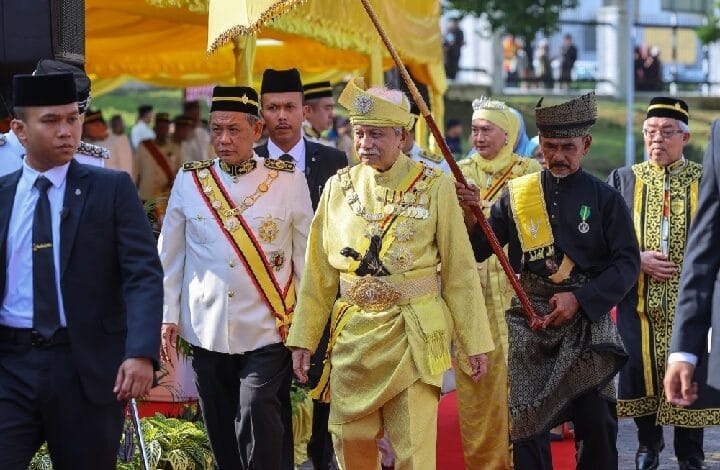
Unlike other states in Malaysia where succession generally follows a hereditary line, Negeri Sembilan has a unique system in which its ruler, known as the Yang di-Pertuan Besar, is elected from among eligible members of the royal family.
This arrangement is rooted in Adat Perpatih, a customary system introduced by Minangkabau settlers from Sumatra centuries ago and remains a defining feature of Negeri Sembilan’s identity.
Under the system, the position of Yang di-Pertuan Besar is not automatically passed to a direct heir following the death or vacancy of the throne. Instead, the successor is selected through a traditional process involving four hereditary chiefs known as the Undang Yang Empat.
The four Undangs represent the traditional territories of Sungai Ujong, Jelebu, Johol and Rembau, and hold a special constitutional role as custodians of Adat Perpatih within their respective areas.
Although they do not manage the daily administration of the state, their authority to select the Yang di-Pertuan Besar places them among the most significant traditional leaders in Malaysia’s constitutional monarchy system.
Another institution that has attracted attention is the Dewan Keadilan dan Undang (DKU), the highest customary council in Negeri Sembilan.
The council consists of the Yang di-Pertuan Besar, the Undang Yang Empat and other senior traditional figures. It plays an important role in matters involving royal customs and traditions.
However, the institution became the focus of a legal dispute involving questions over authority related to the management of its meetings and the position of its secretary.
The dispute highlighted broader questions surrounding the powers and responsibilities of traditional institutions, particularly when disagreements arise among key figures within the customary system.
The current tension intensified after several traditional leaders made a declaration regarding the status of the sitting Yang di-Pertuan Besar, Tuanku Muhriz Tuanku Munawir.
On April 19, three Undangs and Mubarak Dohak, whose position as the Undang of Sungai Ujong was disputed, announced that Tuanku Muhriz had been removed as ruler.
However, the declaration was rejected by the state government, while Prime Minister Datuk Seri Anwar Ibrahim later stated that the federal government continued to recognise Tuanku Muhriz as the legitimate ruler of Negeri Sembilan.
The dispute also triggered political consequences when all 14 Barisan Nasional (BN) state assemblymen withdrew their support for then Menteri Besar Datuk Seri Aminuddin Harun.
BN representatives accused the administration of failing to handle the royal institution issue appropriately and alleged interference in matters involving traditional authority.
The withdrawal of support resulted in uncertainty over whether the state government still commanded a clear majority in the assembly.
With political developments also taking place in Johor, Negeri Sembilan eventually moved towards a fresh election following the dissolution of the state assembly.
As campaigning begins, voters are expected to consider not only political promises involving development, economy and welfare but also the importance of preserving the balance between modern democratic governance and Negeri Sembilan’s unique traditional institutions.
The election has therefore placed Adat Perpatih, a system that has survived for generations, at the centre of national attention as Malaysians observe how political processes and customary authority interact in one of the country’s most distinctive states.