
AI Platform Helps Deliver Global Joint Venture Brand Identity in Just Six Weeks

PHOENIX: Artificial intelligence is increasingly reshaping corporate branding, and Parker Madison Brand Studio has demonstrated its potential by developing the complete identity of an international semiconductor joint venture in only six weeks using its proprietary AI-powered brand evaluation platform.
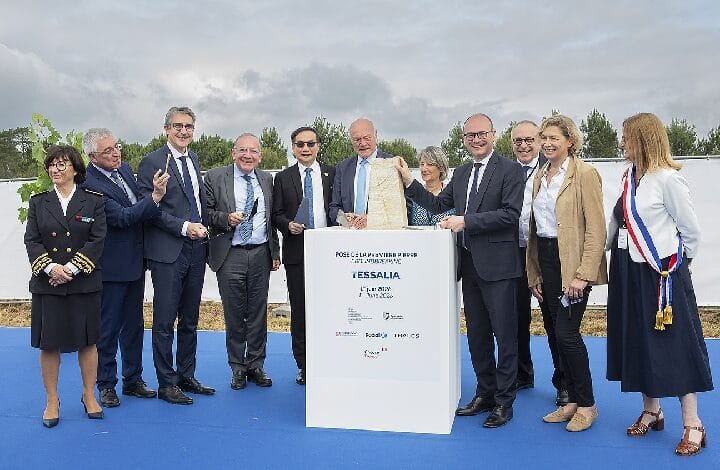
The branding project was completed ahead of the French government’s prestigious Choose France investment summit, where the newly established company, Tessalia Technology SAS, was formally introduced as Europe’s first advanced semiconductor packaging and testing facility.
Rather than relying solely on traditional branding workshops and lengthy stakeholder consultations, Parker Madison utilised its internally developed AI platform, LucidifyPro, to analyse branding concepts, identify areas of consensus and support executive decision-making throughout the project.
The challenge involved aligning three multinational executive leadership teams representing companies with different corporate cultures, strategic priorities and communication styles.
The joint venture brings together French defence technology company Thales, Taiwanese electronics manufacturer Foxconn and French industrial group Radiall.
Located in Le Barp in France’s Nouvelle-Aquitaine region, the facility represents an investment exceeding €250 million and is expected to manufacture more than 50 million System-in-Package (SiP) semiconductor components annually by 2033 while creating as many as 800 jobs.
According to Parker Madison, branding joint ventures often becomes complicated because participating organisations naturally approach identity development from different perspectives.
To minimise subjective debate, LucidifyPro evaluated proposed concepts across several dimensions, including phonetic performance, multilingual adaptability, cultural compatibility, institutional tone and trademark viability in French, English and Mandarin.
The AI assessment revealed that while all stakeholders prioritised engineering precision, they differed in how innovation should be communicated within the company’s identity.
Instead of allowing those differences to delay progress, the platform transformed them into measurable insights, leading the branding team to position innovation as the outcome of technical precision rather than the brand’s primary message.
The AI system also identified a potential trademark conflict during the early development phase, enabling the team to avoid costly legal complications before the name entered formal registration procedures.
The final corporate name, Tessalia, was inspired by the Latin word tessella, referring to the small geometric tiles used in ancient Roman mosaics.
The concept reflects the company’s manufacturing philosophy, where numerous precisely engineered semiconductor components combine to form sophisticated, high-performance electronic systems.
Trademark clearance was subsequently secured across France, the European Union, the United States and China, allowing the identity to be adopted globally.
Interestingly, during the project’s groundbreaking ceremony on June 1, French Minister Delegate for Industry Sébastien Martin independently referenced the historical meaning of the company’s name in his speech, comparing the assembly of Roman mosaics with the precision required in semiconductor packaging.
Parker Madison founder Mark Godfrey said the experience demonstrates that artificial intelligence should not be viewed as a replacement for human creativity.
Instead, he described AI as a strategic decision-support tool capable of providing objective analysis that enables creative teams and corporate leaders to reach consensus more efficiently.
He noted that when branding decisions are supported by reliable analytical data rather than subjective opinion alone, organisations with multiple stakeholders can complete complex identity projects significantly faster while maintaining strategic clarity.
The successful delivery of Tessalia’s corporate identity illustrates how AI is becoming an increasingly valuable component of modern brand strategy, particularly for multinational ventures operating under demanding timelines and involving diverse leadership teams.