
14 Schools Selected for Safe School Zone Pilot Project Benefiting Nearly 20,000 Students

SEPANG: A total of 14 schools nationwide have been selected for the Safe School Zone pilot project, an initiative aimed at improving road safety around schools and reducing the risk of accidents involving students and other road users.
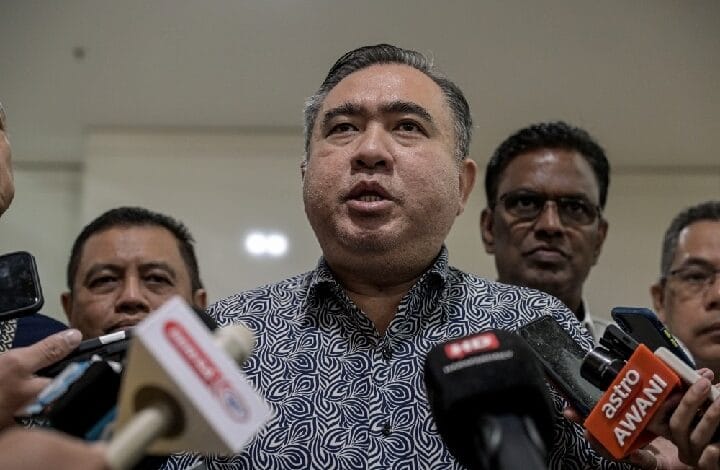
Transport Minister Anthony Loke said the programme is expected to benefit nearly 20,000 students, teachers and school staff through a series of infrastructure improvements designed to prioritise safety.
According to him, the first pilot project has already been implemented at a school in Brickfields, Kuala Lumpur, while the remaining schools are expected to complete the upgrades within the next few months.
Loke said schools were selected based on several factors, including their proximity to busy federal and state roads as well as accident risks in surrounding areas.
“The Safe School Zone is not just about putting up signs or painting pedestrian crossings.
“It involves redesigning the areas in front of schools with various safety features that encourage motorists to slow down,” he said after officiating the Malaysian Road Safety Council (MKJR) Annual General Meeting here today.
Among the key components of the project are speed bumps, traffic-calming measures, safer pedestrian crossings and road furniture designed to improve safety for students and other pedestrians.
Loke said such interventions are necessary as statistics show that nearly 70 accidents occur annually in school zones across the country.
“This is not a small figure.
“We want to ensure that areas surrounding schools are safer and more pedestrian-friendly, especially for children who walk or cycle to school,” he said.
The minister noted that the initiative was approved during last year’s MKJR Annual General Meeting as part of a long-term strategy to reduce road accidents nationwide.
However, he acknowledged that the cost of implementing a Safe School Zone ranges from RM200,000 to RM300,000 per school, depending on site conditions and infrastructure requirements.
Given the high costs involved, Loke said the government alone cannot finance the expansion of the programme to a larger number of schools.
He therefore called on corporations, property developers and private companies to contribute by sponsoring schools under the initiative.
“We hope more companies will come forward and support this programme.
“Some organisations may be able to adopt five or even 10 schools annually and help fund these safety improvements,” he said.
Loke said if the approach proves successful, hundreds or even thousands of schools across the country could eventually benefit from the initiative.
“We want to see many more schools protected under the Safe School Zone programme.
“But this cannot depend solely on MKJR’s allocation. It requires cooperation from all stakeholders,” he said.
In a related development, Loke also announced an allocation of RM30,000 for each state Road Safety Council to strengthen operations and expand road safety programmes at the state and community levels.
He added that MKJR will continue implementing other initiatives, including the MySafeRoad programme, which focuses on localised solutions to accident-prone areas through collaboration with communities and local authorities.