
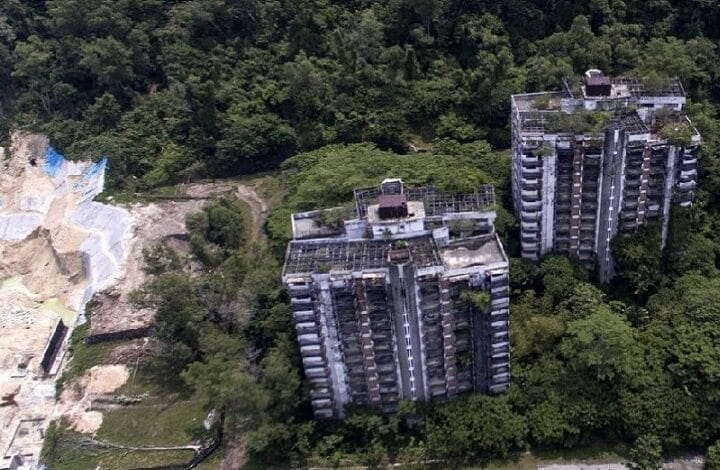
Highland Towers Demolition Expected This Year After Court Gives MPAJ Green Light

KUALA LUMPUR: The long-awaited demolition of the remaining two blocks of Highland Towers in Hulu Kelang is expected to take place before the end of this year after a Magistrates’ Court granted approval for the Ampang Jaya Municipal Council (MPAJ) to proceed with the plan.
The ruling marks a major breakthrough in efforts to resolve one of Malaysia’s longest-running property and safety issues, more than three decades after the tragic Highland Towers collapse that claimed 48 lives in 1993.
MPAJ deputy president Hasrolnizam Shaari said the court approved the council’s application last week, effectively clearing the legal obstacles that had delayed the demolition of the abandoned structures for years.
According to him, the local authority is now moving swiftly to coordinate the next phase of the project, including discussions with relevant stakeholders and agencies involved in the demolition process.
“We will organise a coordination meeting involving the unit owners, represented by the developer and the Insolvency Department.
“We expect this matter will not take long because everyone is clear about the objective that has been set.
“Within this year, the demolition process will take place,” he said.
Hasrolnizam explained that MPAJ is currently focusing on technical preparations and identifying the parties responsible for carrying out the demolition works.
He said the court’s decision was particularly significant because it provides the legal basis needed to move forward after years of administrative complications and legal disputes.
According to him, all stakeholders now share the same objective of resolving the long-standing issue and ensuring the remaining structures are safely removed.
The Highland Towers tragedy remains one of the darkest chapters in Malaysia’s urban development history.
On December 11, 1993, one of the condominium’s three residential blocks collapsed after a landslide triggered by prolonged heavy rainfall in the surrounding hillside area.
The disaster killed 48 people and shocked the nation, prompting widespread concerns about hillside developments, slope management and construction safety standards.
Following the collapse, the remaining two blocks were evacuated as a precautionary measure.
Although the buildings remained structurally standing, they were deemed unsafe for occupancy and have remained abandoned ever since.
Over the years, the two vacant towers became an eerie reminder of the tragedy, with numerous proposals to demolish them failing to materialise due to legal complications, ownership issues and administrative hurdles.
Successive attempts to resolve the matter were delayed as authorities sought to address disputes involving unit owners, developers and other parties connected to the site.
Hasrolnizam said the latest court ruling finally gives MPAJ the authority to proceed and brings the decades-long issue closer to a resolution.
He expressed confidence that the necessary coordination with stakeholders could be completed within a reasonable timeframe, allowing demolition works to begin as planned.
“Everyone understands the objective that we are trying to achieve.
“What is important now is ensuring that all technical matters and coordination efforts are completed as quickly as possible,” he said.
If the demolition is successfully carried out this year, it will bring closure to a chapter that has remained unresolved for more than 30 years.
More importantly, it would remove the last physical remnants of a tragedy that forever changed Malaysia’s approach to hillside development and building safety, while offering a sense of closure to families affected by one of the nation’s worst residential disasters.