MCTC calls for higher tobacco taxes to support Malaysia’s ‘Endgame 2045’ anti-smoking target

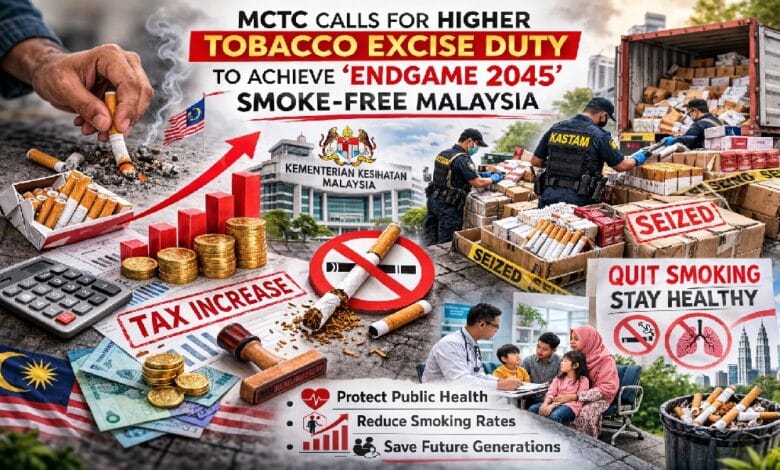
KUALA LUMPUR, Feb 18 — The Malaysian Council for Tobacco Control (MCTC) has urged the government to increase excise duties on tobacco products, describing the move as a critical measure to reduce smoking rates and support Malaysia’s long-term goal of achieving a smoke-free generation by 2045.
Its president, Prof Dr Murallitharan Munisamy, said raising tobacco taxes remains one of the most effective public health strategies globally, particularly in discouraging smoking among young people and lower-income groups who are more sensitive to price increases.
He explained that higher tobacco prices could help prevent new smokers from picking up the habit while also encouraging existing smokers to reduce consumption or quit altogether.
However, he stressed that tax increases alone would not be sufficient without strong and coordinated enforcement measures.
According to him, weak enforcement could allow illicit tobacco products to flood the market, undermining the impact of higher taxes.
He noted that Malaysia is a signatory to the World Health Organisation’s Framework Convention on Tobacco Control, which reflects the country’s commitment to reducing tobacco use through proven policy measures.
Numerous international studies have shown that tobacco tax increases can significantly reduce smoking initiation among adolescents and lower overall consumption levels.
MCTC also pointed out that tobacco excise duties in Malaysia have remained unchanged since 2015.
This has created an urgent need to review and update fiscal policies to ensure they remain effective in achieving national public health objectives.
Addressing concerns about smuggling, he cited a World Bank report which found that illicit tobacco trade is more closely linked to weak enforcement and governance rather than tax rates alone.
This suggests that strengthening enforcement mechanisms is essential to ensure tax increases achieve their intended outcomes.
MCTC also called on the government to ratify the Protocol to Eliminate Illicit Trade in Tobacco Products.
This would help strengthen licensing systems, improve tracking mechanisms, and enhance international cooperation.
Currently, tobacco regulation in Malaysia involves multiple agencies, including the National Kenaf and Tobacco Board, the Ministry of Health, and the Royal Malaysian Customs Department.
The Solid Waste and Public Cleansing Management Corporation is also involved in managing cigarette waste.
However, this fragmented structure has created coordination challenges and resource limitations.
MCTC said stronger coordination and clearer enforcement responsibilities are needed to improve effectiveness.
They suggested empowering local authorities with proper resources and authority to strengthen enforcement efforts.
The council warned that without a solid enforcement framework, tax increases may fail to achieve their intended public health impact.
Ultimately, MCTC believes that a combination of higher tobacco taxes and stronger enforcement will help Malaysia move closer to its Endgame 2045 target.
Such measures are expected to reduce smoking prevalence and improve long-term public health outcomes nationwide.
-wilayah.com.my