
Malaysia Studies National Water Reclamation Policy to Support Data Centres and Industrial Growth

KUALA LUMPUR: The government is conducting a comprehensive study on introducing a National Water Reclamation Policy as part of its long-term strategy to strengthen sustainable water management while supporting the country’s expanding industrial sector and growing data centre industry.
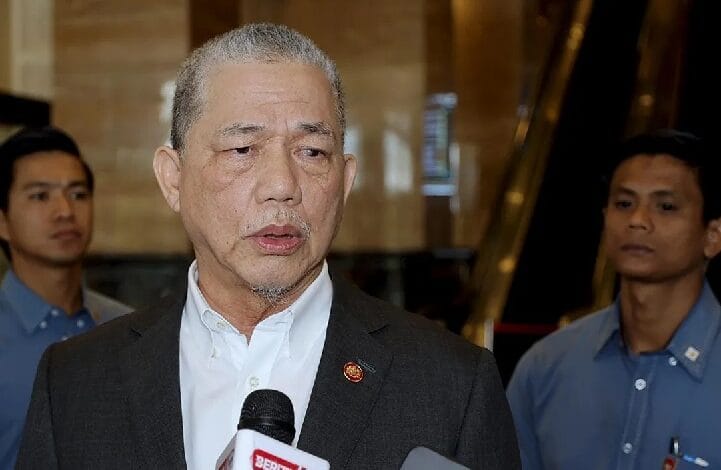
Deputy Prime Minister and Minister of Energy Transition and Water Transformation Datuk Seri Fadillah Yusof said the proposed policy is intended to establish a stronger framework for reclaimed water usage as Malaysia accelerates its digital economy and infrastructure development.
He said the ongoing study extends beyond policy formulation and includes the development of supporting infrastructure required to enable large-scale implementation of water reclamation initiatives.
According to Fadillah, the initiative forms part of a broader national strategy that integrates energy, water and digital infrastructure rather than treating them as separate development agendas.
“This is not a collection of isolated initiatives but a coordinated national response involving the country’s energy, water and digital infrastructure systems.
“It will require close collaboration among federal ministries, state governments, relevant agencies and non-governmental organisations,” he told reporters after delivering the keynote address at the Fifth World Digital Economy and Technology Summit (WDET) 2026 here today.
Fadillah said Malaysia currently produces approximately 48.5 million litres of reclaimed water each day and aims to increase production to 118 million litres daily by 2030 for industrial use.
He noted that expanding reclaimed water capacity would improve long-term water security while reducing dependence on conventional freshwater resources.
The minister also said PETRA’s Strategic Plan 2026-2030 outlines 119 programmes and 133 measurable targets to drive the transformation of the country’s energy and water sectors.
Among the plan’s key priorities are electricity grid modernisation, digitalisation of utility systems and more efficient demand management for both energy and water resources.
On renewable energy development, Fadillah said Malaysia had surpassed 13.3 gigawatts of installed renewable energy capacity by the end of 2025, with solar power recording the fastest rate of expansion.
He added that the government is also developing a 1,000-megawatt solar project to provide clean electricity to the Johor-Singapore Special Economic Zone (JS-SEZ), supporting the region’s infrastructure ecosystem and long-term economic growth.