
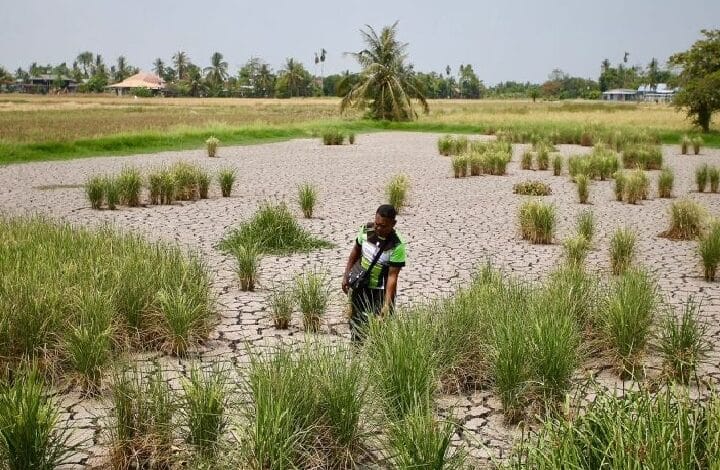
MADA Switches to Dry Seeding as Drought Tightens Grip on Kedah’s Paddy Sector

ALOR SETAR, April 2 — Facing prolonged dry weather and declining rainfall, Malaysia’s Muda Agricultural Development Authority (MADA) has shifted to dry direct seeding (DDS) for the first planting season of 2026 in an effort to sustain paddy cultivation across the region.
MADA chairman Datuk Dr Ismail Salleh said the move was driven by critically low water reserves and the need to prevent disruptions to planting activities, which are vital to maintaining national rice production.
He noted that while the method is not typically preferred, it has become necessary under current conditions where irrigation supply is insufficient to support conventional planting techniques.
“We cannot afford delays in planting. Even with limited water, we must ensure that farmers can continue their work and that rice production remains stable,” he said.
Farmers Face Higher Costs and Lower Returns
The transition to dry seeding is expected to bring significant challenges, particularly for farmers who must adapt to a more demanding and costly process.
Dr Ismail explained that the method requires increased use of seeds and herbicides, as weeds tend to grow more aggressively in dry soil environments.
Additionally, land preparation is more labour-intensive, involving multiple rounds of ploughing to achieve suitable soil conditions for seeding.
“These additional requirements will inevitably raise production costs, placing extra pressure on farmers already dealing with difficult conditions,” he said.
He added that yields are likely to decline compared to normal seasons, with current estimates suggesting an average of about four tonnes per hectare, depending on rainfall developments.
Past Drought Experiences Inform Current Strategy
MADA’s decision is informed by past experiences, having previously implemented similar methods during earlier drought periods.
Historical data shows that yields during those times were affected by the lack of rainfall, although outcomes improved in years when weather conditions became more favourable.
Dr Ismail said the authority remains flexible and will adjust its approach if rainfall increases in the coming weeks.
“If the situation improves and we receive sufficient rain, we can revert to conventional planting methods,” he noted.
Tight Water Management and Structured Timeline
With reservoir levels dropping to concerning levels, water management has become a critical priority. Controlled water release is being implemented to ensure that available resources are used efficiently throughout the planting cycle.
At the same time, a phased schedule has been introduced for land preparation and seeding activities, extending from April to June to maintain order and efficiency in operations.
Rainfall in the Muda region has fallen significantly below historical averages, highlighting the severity of the current drought and reinforcing the need for adaptive measures.
The shift to dry direct seeding underscores the growing importance of resilient agricultural strategies in the face of climate uncertainty, as Malaysia works to secure its food supply under increasingly challenging conditions.
-wilayah.com.my