KPKT Pledges Support for Orderly Regularisation of Unapproved Places of Worship

IPOH, Feb 8 — The Ministry of Housing and Local Government (KPKT) has reaffirmed its commitment to work with state governments in implementing programmes to regularise places of worship built without approval, adopting an approach that balances legal compliance with social harmony.
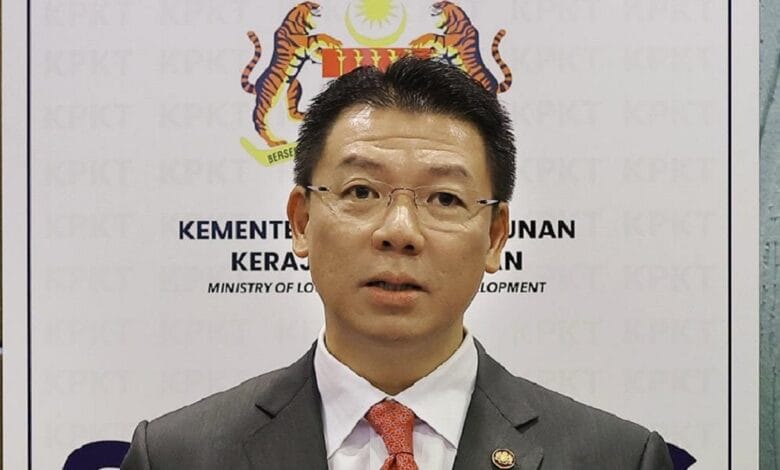
Housing and Local Government Minister Nga Kor Ming said that while land matters fall under state jurisdiction, KPKT is prepared to provide support to ensure the regularisation process is carried out in a structured and prudent manner.
He noted that the issue of unapproved places of worship is complex and cannot be resolved hastily, as it involves legal considerations, historical context and community sensitivities. As such, close coordination between the federal government, state authorities and local councils is essential to reach fair and sustainable outcomes.
Nga explained that within KPKT, there is a dedicated unit responsible for non-Muslim places of worship, while matters related to Islamic places of worship are overseen under the Prime Minister’s Department through relevant agencies. This coordinated framework, he said, helps ensure that each case is assessed comprehensively.
Upholding the Law While Acknowledging History
Nga stressed that all places of worship are subject to existing laws, including the requirement to obtain planning approval prior to construction or occupation. This obligation, he said, applies equally to mosques, churches, temples and shrines.
At the same time, he cautioned against a rigid enforcement approach, pointing out that some places of worship were established long before the enactment of the National Land Code and local government legislation. In such cases, enforcement measures must take historical realities into account to avoid undermining social cohesion.
“This is an issue that has developed over many years. It must be addressed with wisdom, dialogue and a conciliatory approach,” he said.
Conditional Regularisation in the Public Interest
Nga said regularisation may be considered provided the places of worship concerned do not pose risks to public order, encroach on river reserves or adversely affect traffic flow and road safety. Such conditional measures, he added, reflect the Malaysia MADANI ethos of balancing the rule of law with inclusiveness and mutual respect.
He was speaking to reporters after attending a Chinese New Year MADANI aid distribution programme for about 800 students from 18 schools at Sekolah Rendah Jenis Kebangsaan Cina (SRJKC) Bercham here.
-wilayah.com.my