From Silence to Confidence: Volunteer Programme Transforms Young Readers Across Malaysian Schools

KUALA LUMPUR, April 20 — What begins as a struggle with simple words can often grow into a lifelong barrier to learning. For hundreds of Malaysian pupils, however, that trajectory has been reversed through a volunteer-driven initiative that is quietly reshaping how literacy challenges are addressed.
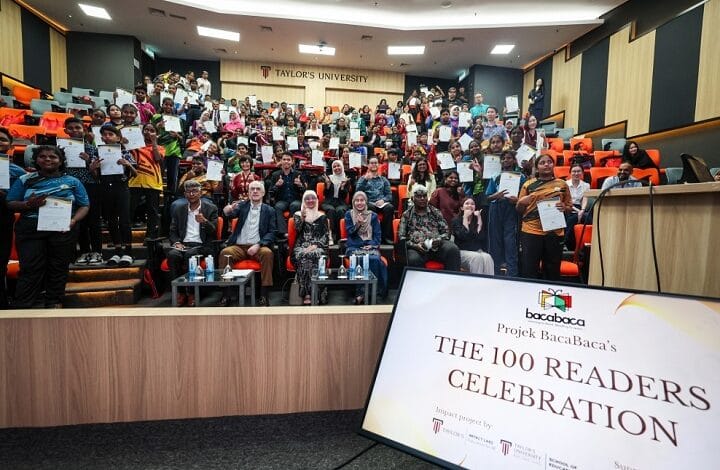
“Projek BacaBaca”, an initiative under the Education for All Impact Lab at Taylor’s University, has recorded full literacy improvement among participating students, while also rebuilding confidence and engagement in the classroom.
Since its launch in 2021, the programme has reached more than 700 pupils across diverse communities, including urban low-income households, rural schools and Orang Asli settlements. Its success lies not only in its outcomes, but in its approach — small-group, consistent guidance delivered by trained volunteers.
At the heart of the programme are stories like that of Sophia Irine, a 12-year-old student who once struggled to read basic text. A Year Six pupil at Sekolah Kebangsaan Bandar Sunway, Sophia recalled a time when reading aloud in class was a source of anxiety.
“I used to avoid reading because I was afraid of making mistakes,” she said, describing how teasing from peers further affected her confidence.
Her experience began to change when she joined Projek BacaBaca during Year Five. Through weekly sessions with “coach readers”, she received focused attention that helped her gradually improve her reading and comprehension skills.
Today, Sophia speaks more confidently and participates actively in class, marking a significant shift from her earlier experience.
Another participant, Kesavan Sai, 12, from SJKT Ladang Effingham, shared how the programme helped him overcome both literacy and language barriers. Previously more comfortable speaking Tamil, he found it difficult to communicate in Bahasa Malaysia.
Through consistent practice and encouragement, he has since developed the ability to read and respond in Malay, allowing him to interact more confidently with others.
Programme head Hema Letchamanan said such transformations are the result of a targeted approach designed to address gaps often overlooked in traditional classroom settings.
She explained that large class sizes can make it difficult for teachers to provide individualised support, particularly for students who require more time to grasp foundational skills.
“Our focus is to ensure that no child is left behind in literacy. Reading is not just a subject — it is the foundation for all learning,” she said.
The initiative relies on the commitment of more than 500 volunteers who have contributed their time over the past five years. By working in small groups, these volunteers are able to tailor their guidance to each student’s pace and ability.
This personalised approach has proven effective in improving not only literacy rates but also student confidence. Many participants who were initially passive have become more engaged in their studies.
The programme has also drawn support from the Education Ministry. Deputy Director-General (Policy and Curriculum Sector) Rusmini Ku Ahmad described literacy gaps as a form of learning deprivation rather than an issue of access.
She said initiatives like Projek BacaBaca play a crucial role in bridging these gaps by providing structured support to students who need additional help.
Beyond academic outcomes, the programme has contributed to broader personal development. Students have shown greater interest in learning and improved communication skills.
As discussions continue on strengthening Malaysia’s education system, Projek BacaBaca stands out as an example of how community-driven efforts can complement formal education.
With proven results and growing recognition, there are increasing calls to expand the initiative nationwide, ensuring that more children have the opportunity to build a strong foundation in reading — and with it, a brighter future.
-wilayah.com.my