
Analysts Say DAP Cabinet Exit Would Not Collapse Anwar Government Without Parliamentary Withdrawal

KUALA LUMPUR — Any move by leaders from the Democratic Action Party (DAP) to resign from Cabinet or government-linked company roles would not automatically destabilise the federal government or trigger a snap election, analysts said, as long as the party maintains its parliamentary backing for Prime Minister Datuk Seri Anwar Ibrahim.
Political observers stressed that parliamentary confidence — not Cabinet participation — remains the decisive factor in determining whether a government stays in power.
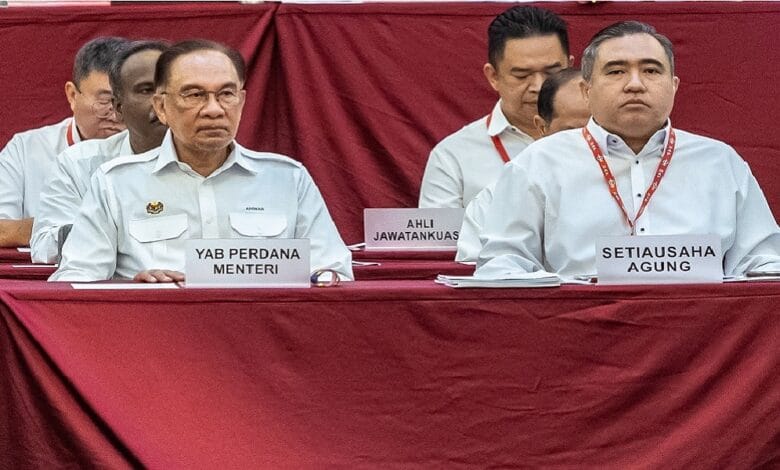
The issue gained traction after DAP secretary-general Anthony Loke Siew Fook said the party would evaluate its role in the unity government during its national congress scheduled for July.
The statement followed the party’s weaker-than-expected performance in the Sabah state election, which prompted internal discussions on its future political positioning.
Several senior figures within the party have floated the possibility of stepping down from executive roles if reform commitments are not fulfilled within a specified timeline.
Analysts said such a decision would likely be intended to reinforce the party’s reform credentials and reassure its grassroots supporters.
However, experts emphasised that such resignations alone would not bring down the government.
Geopolitical analyst Azmi Hassan said the government’s survival depends entirely on whether it continues to command majority support in Parliament.
He explained that under Malaysia’s parliamentary system, Cabinet composition does not determine legitimacy — legislative confidence does.
Political analyst Oh Ei Sun echoed this view, noting that Cabinet resignations have limited constitutional impact if parliamentary support remains intact.
He said confidence votes, budget approvals, and legislative backing are the true indicators of political stability.
Political science lecturer Syaza Shukri added that constitutional principles clearly place parliamentary confidence above executive participation.
She warned, however, that such developments could still shape public perception and political narratives.
Even if the administration remains secure numerically, she said, it could face increased political scrutiny and pressure.
Analysts noted that coalition governments often experience internal tensions, but these do not necessarily translate into immediate political collapse.
Ultimately, they said, the key determinant will be whether the ruling coalition continues to maintain its majority support in Parliament.
-wilayah.com.my