
Malaysia Unveils National Defence Roadmap Focused on Modernisation, Self-Reliance and Talent Development

KUALA LUMPUR: Malaysia has launched an ambitious five-year defence roadmap aimed at strengthening national security through military modernisation, domestic defence industry development, strategic diplomacy and long-term investment in human capital under the National Defence Strategic Plan (PSPN) 2026-2030.
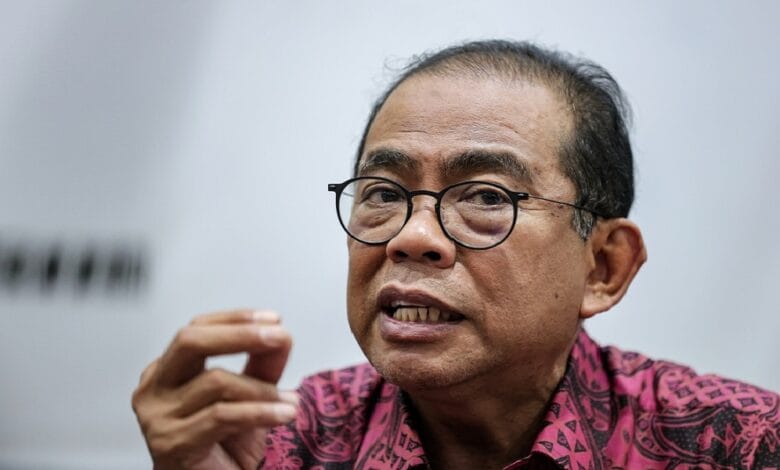
Defence Minister Datuk Seri Mohamed Khaled Nordin said the new strategy represents a significant shift in national defence planning by positioning security as a whole-of-nation responsibility rather than solely the responsibility of the Ministry of Defence.
Speaking at the launch of the National Defence Strategic Plan 2026-2030 and the National Defence Capacity Action Plan, he said the rebranding of the ministry’s previous strategic plan reflects the changing nature of security threats, which increasingly extend beyond conventional military conflicts.
According to him, modern security challenges now encompass cyber threats, economic resilience, technological competition, energy security and supply chain disruptions, requiring coordinated responses across government institutions and society.
Despite expanding its defence capabilities, Mohamed Khaled stressed that Malaysia will continue adhering to its long-standing principles of neutrality and non-alignment while strengthening defence diplomacy with regional and international partners.
He said Malaysia’s ability to facilitate constructive dialogue among countries with differing strategic interests remains one of its key diplomatic strengths and contributes to regional stability.
Alongside diplomatic engagement, the government intends to accelerate the modernisation of the Malaysian Armed Forces while expanding domestic defence manufacturing and technological capabilities to reduce reliance on external suppliers.
The National Defence Strategic Plan outlines seven strategic pillars supported by 29 core strategies and 103 integrated initiatives, with implementation to be jointly led by senior civilian officials and military leadership.
Complementing the strategic framework is the newly introduced National Defence Capacity Action Plan, which was formulated following the Mid-Term Review of the Defence White Paper.
The action plan focuses on three priority areas: enhancing operational effectiveness, strengthening patriotism and developing talent in science, technology and the national defence industry.
These priorities are supported by seven strategic programmes and 18 implementation initiatives designed to reinforce Malaysia’s defence workforce and long-term institutional capabilities.
Mohamed Khaled explained that while the National Defence Strategic Plan establishes the country’s long-term strategic direction, the accompanying action plan provides the financial resources, technological capabilities, leadership development, research capacity and inter-agency coordination necessary to achieve those objectives.
Referring to ongoing geopolitical developments in West Asia, he said recent conflicts demonstrate that defence planning can no longer be separated from economic resilience, energy security and global supply chains.
He stressed that Malaysia must continue investing in strategic research, intelligence analysis and national resilience to anticipate emerging security challenges before they materialise.
Beyond military capability, the government will also prioritise the welfare of serving personnel, veterans and their families over the next five years.
Planned initiatives include constructing six new Armed Forces Family Housing (RKAT) projects, upgrading approximately 20,000 existing housing units, building two new military polyclinics and modernising existing military hospitals.
The government will also continue cost-of-living support programmes for military families while expanding employment pathways for veterans through work-based learning, reskilling, upskilling, PERHEBAT initiatives and the PROWIRA Ready To Work programme.
According to Mohamed Khaled, all initiatives under both strategic documents will be implemented in phases over the next five years to ensure Malaysia develops a stronger, more resilient and future-ready defence ecosystem capable of responding to increasingly complex global security challenges.