Penang To Continue Strategic Water Supply Projects Despite Rising Global Costs

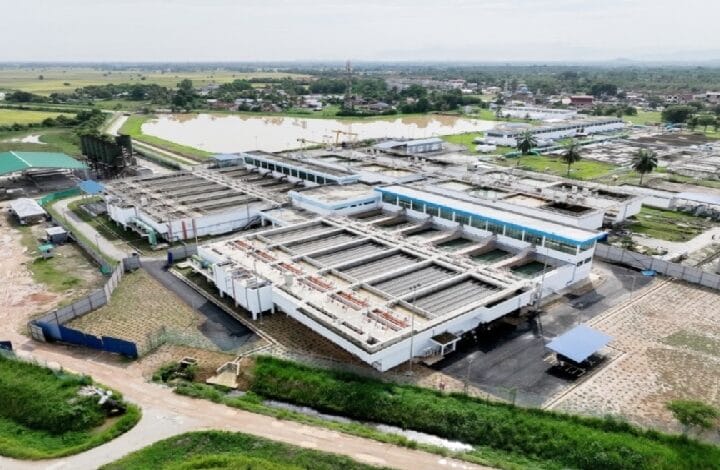
GEORGE TOWN: The Penang government will proceed with all strategic water supply projects under the Water Contingency Plan 2030 despite facing rising construction and operational costs caused by global economic uncertainty.
Chief Minister Chow Kon Yeow said the projects undertaken by Perbadanan Bekalan Air Pulau Pinang (PBAPP) remain a top priority for the state administration because they are closely linked to long-term water security for residents, industries and future economic growth.
According to him, the state government has no intention of delaying the projects even as construction, logistics and operating costs continue to rise due to increasing prices of building materials and fuel.
“All projects under the Water Contingency Plan 2030 will continue as planned because they are crucial to ensuring the continuity of Penang’s water supply.
“We have also secured financing through sukuk instruments to fund the implementation of these strategic projects,” he said during the Penang State Legislative Assembly sitting today.
Chow Kon Yeow, who is also the Padang Kota assemblyman, said this while responding to an additional question from Lee Boon Heng regarding the impact of rising operational costs faced by PBAPP amid current global economic pressures.
He explained that the sukuk financing arrangement enables the state government to ensure that critical water infrastructure projects continue without disruption despite the challenging economic climate.
According to him, Penang, as one of Malaysia’s leading industrial states, requires a stable and sufficient water supply system to support economic activities, manufacturing operations and foreign investments.
He stressed that any delay involving water infrastructure projects could significantly affect the state’s development trajectory and public well-being.
In a related development, Chow Kon Yeow said Perbadanan Pembangunan Pulau Pinang (PDC) has also taken several adjustment measures in response to rising costs.
He said several development projects have been postponed for at least six months to allow contractors to reassess the impact of higher material and operational expenses.
In addition, PDC has agreed in principle to share increased project costs with contractors through a cost-sharing mechanism.
“The state government itself is also affected by rising global costs, including higher diesel prices which are putting pressure on local authorities’ operational spending.
“For example, Majlis Bandaraya Seberang Perai is expected to bear an additional RM5 million in operating costs due to diesel price increases,” he said.
He also acknowledged that the Penang government is currently unable to introduce its own economic stimulus package because it is similarly affected by global economic uncertainty.
However, he noted that the federal government has already implemented several support initiatives, including financing assistance through banking institutions to help small and medium enterprises (SMEs) manage cash flow pressures and rising operational costs.
According to him, such financing support is essential to ensure SMEs remain resilient and competitive amid difficult economic conditions.
The Water Contingency Plan 2030 was previously introduced as a long-term strategy to ensure Penang’s water supply capacity can meet future domestic and industrial demand.
As one of Malaysia’s major technology and manufacturing investment hubs, Penang relies heavily on efficient and reliable water infrastructure to support its economic ecosystem.
Industry observers believe the continuation of water supply projects is crucial in maintaining investor confidence and ensuring the state remains capable of supporting long-term industrial and economic expansion.
At the same time, rising global costs involving raw materials, energy and logistics continue to place pressure on development projects nationwide.
Despite those challenges, the Penang government stressed that water supply infrastructure projects will remain a key priority because they are directly linked to public welfare and the state’s long-term economic sustainability.
-wilayah.com.my