
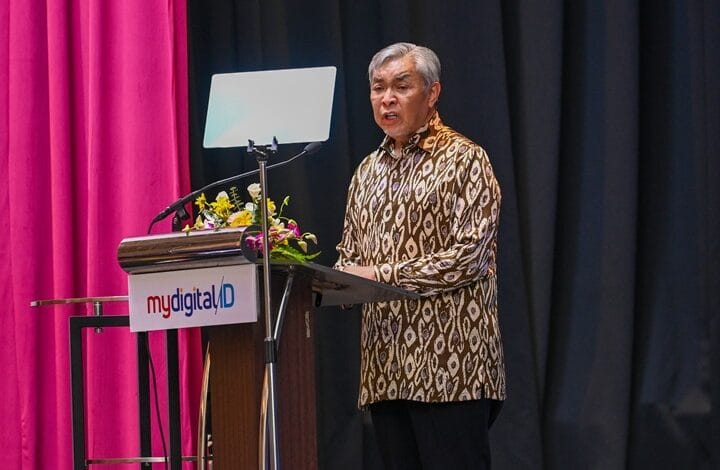
Ahmad Zahid Hamidi: Timing of GE16 with State Polls Depends on Political Climate and Royal Consent

KUALA LUMPUR, May 4 — Any proposal to hold Malaysia’s 16th General Election (GE16) concurrently with the Melaka and Johor state elections will depend on multiple factors, including the prevailing political situation and the consent of the country’s royal institutions.
Deputy Prime Minister Ahmad Zahid Hamidi said such decisions cannot be made unilaterally, as they involve constitutional processes and the authority of state rulers and governors.
He explained that the dissolution of state legislative assemblies falls under the jurisdiction of the respective heads of state, acting on the advice of the Menteri Besar or Chief Minister.
“This matter ultimately depends on the consent of the rulers or governors, based on advice from the state leadership. It is not purely a political decision,” he said in an interview marking Umno’s 80th anniversary.
Zahid also highlighted financial considerations as a key factor, noting that the cost of organising elections is substantial and requires careful planning by the Election Commission of Malaysia (SPR).
While simultaneous elections could potentially reduce logistical duplication, he said the timing and overall suitability must still be evaluated in the context of current national conditions.
“The cost factor is significant, but timing and appropriateness are equally important,” he added.
His remarks come amid broader economic challenges, including global supply disruptions and fiscal constraints, which continue to shape government decision-making.
At the same time, Zahid emphasised that Umno and Barisan Nasional (BN) machinery remain prepared for elections at any time.
However, he cautioned against overreliance on core party supporters, stressing the need to engage non-partisan voters and those not aligned with any political group.
“We must reach out to voters beyond party lines and present an agenda that resonates with a wider segment of society,” he said.
He also underscored the importance of adapting to a changing political landscape, where voters increasingly prioritise issues and leadership over party loyalty.
In terms of timelines, the Melaka state assembly is expected to dissolve automatically in December this year, while Johor’s term ends in April next year if no early dissolution occurs.
Under the law, the Election Commission of Malaysia has up to 60 days after dissolution to conduct elections, setting a general timeframe for both state polls.
Overall, the possibility of holding GE16 concurrently with state elections remains subject to constitutional, political and economic considerations, with final decisions to be made when conditions are deemed appropriate.
-wilayah.com.my