
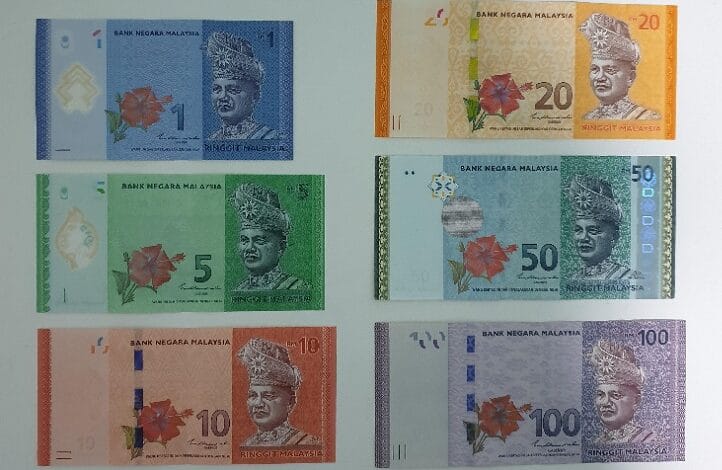
Ringgit Edges Higher Against US Dollar on Tech Inflows and Improved Global Sentiment

KUALA LUMPUR, April 27 — The Malaysian ringgit closed stronger against the US dollar on Monday, supported by renewed market optimism and sustained capital inflows into technology-linked sectors, particularly semiconductors, which continue to bolster Malaysia’s economic outlook.
At 6pm, the local currency appreciated to 3.9505/9545 against the greenback, compared with 3.9630/9670 at last Friday’s close, reflecting a firmer tone in the currency market.
Market participants attributed the ringgit’s gains partly to easing geopolitical tensions, following reports that the White House is reviewing a potential peace initiative involving Iran. The development helped reduce global risk premiums and weakened the US dollar slightly.
SPI Asset Management managing partner Stephen Innes said the strengthening of the ringgit was not solely driven by geopolitical developments but also supported by broader structural factors in the global economy.
He noted that rising demand for computing power, artificial intelligence infrastructure and digital technologies has led to increased capital flows into semiconductor-related economies, placing Malaysia in a favourable position.
“Malaysia continues to benefit from its role in the global semiconductor supply chain, and this has helped attract foreign inflows that support the ringgit,” he said.
The improved sentiment comes at a time when investors are closely monitoring a series of key central bank meetings scheduled this week, including those by the Federal Reserve, the European Central Bank, the Bank of Japan and the Bank of England.
The Federal Open Market Committee is set to convene from April 28 to 29, with investors looking for guidance on interest rate policy and the broader economic outlook.
Despite gaining against the US dollar, the ringgit weakened against several major currencies. It declined against the euro to 4.6387/6434, slipped slightly against the Japanese yen to 2.4810/4837, and eased against the British pound to 5.3525/3580.
In contrast, the local currency performed better against most regional peers. It strengthened against the Thai baht to 12.2129/2309, rose against the Indonesian rupiah to 229.5/229.8, and gained against the Philippine peso to 6.50/6.51.
However, the ringgit edged lower against the Singapore dollar, trading at 3.1018/1052 compared with its previous close.
Analysts said the mixed performance reflects the interplay between global and regional dynamics, with major currencies influenced by broader macroeconomic factors while regional currencies respond more to domestic and intra-Asian developments.
Looking ahead, the ringgit is expected to remain sensitive to geopolitical developments and global monetary policy signals, particularly from major economies.
Nonetheless, continued inflows into Malaysia’s technology sector, combined with improving external sentiment, are likely to provide underlying support for the currency in the near term.
-wilayah.com.my