
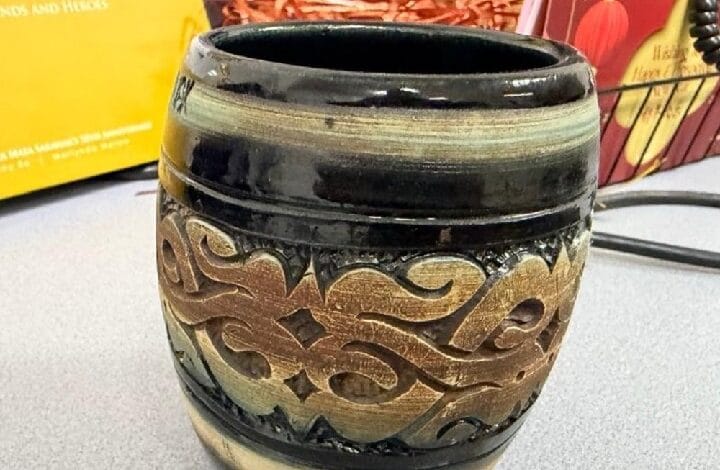
Sarawak Moves to Revitalise Traditional Pottery Industry Through Innovation and Cultural Preservation

KUCHING: Industry leaders and government agencies in Sarawak are intensifying efforts to rejuvenate the state’s traditional pottery and ceramic sector as part of a broader strategy to preserve cultural heritage while expanding opportunities within the creative economy.
Chief executive officer of the Sarawak Craft Council, Suriya Charles Buas, said traditional pottery represents far more than commercial products, describing it as a cultural legacy deeply connected to Sarawak’s multicultural identity and artistic traditions.
He said pottery once stood among the state’s signature tourism products and was highly sought after by visitors as a symbol of Sarawak’s local heritage.
According to him, the decline of the industry over the years has been caused by multiple factors including a shrinking number of skilled artisans, limited market exposure, increasing competition from imported products and insufficient support for innovation and talent development.
“If no serious action is taken now, we risk losing not only economic opportunities but also an important cultural inheritance that defines part of Sarawak’s identity,” he said during the Town Hall on Ceramic and Pottery Programme held here.
Suriya Charles Buas added that several revitalisation initiatives are currently being planned in collaboration with state agencies, including a large-scale pottery and ceramics conference and expo scheduled for next year.
Meanwhile, president of the Sarawak Handicrafts, Arts and Souvenir Association, Gerald Goh Teck Joo, said local pottery entrepreneurs are also facing increasing pressure from shortages of raw materials, which have forced many businesses to depend on more costly imported supplies.
He noted that evolving tourism trends have also influenced the industry, as modern travellers increasingly seek interactive and experiential activities instead of simply purchasing souvenirs.
“Many tourists appreciate pottery demonstrations and cultural experiences, but this does not always result in direct sales of traditional products,” he explained.
Despite the challenges, ceramic entrepreneur Nabilah Abdullah believes the industry still holds significant commercial potential if businesses embrace innovation and adapt to changing consumer preferences.
She said smaller ceramic products such as handmade beads are becoming increasingly popular because they require fewer materials, are easier to transport and provide higher profit margins compared to larger pottery items.
According to Nabilah Abdullah, digital platforms now play a vital role in helping artisans reach broader audiences and market their products beyond conventional retail spaces.
“We need to strengthen our online visibility through platforms such as Instagram, Facebook and websites so customers can easily discover local ceramic products,” she said.
She also encouraged stronger partnerships between craft entrepreneurs and tourism operators through workshops, demonstrations and hands-on ceramic experiences aimed at attracting visitors while creating new revenue opportunities.
At the same event, Sarawak branch director of the Malaysian Handicraft Development Corporation, Mohd Fu’ad Ariffin, said the agency continues to support the industry through research and development, technical training, product innovation and market expansion programmes.
He stressed that continuous improvement in craftsmanship and innovation is necessary to ensure Sarawak’s traditional craft sector remains sustainable and competitive in the long term.
“Our goal is not just to produce handicraft products but to build a complete ecosystem that supports entrepreneurs from skills development to market readiness,” he said.
-wilayah.com.my