
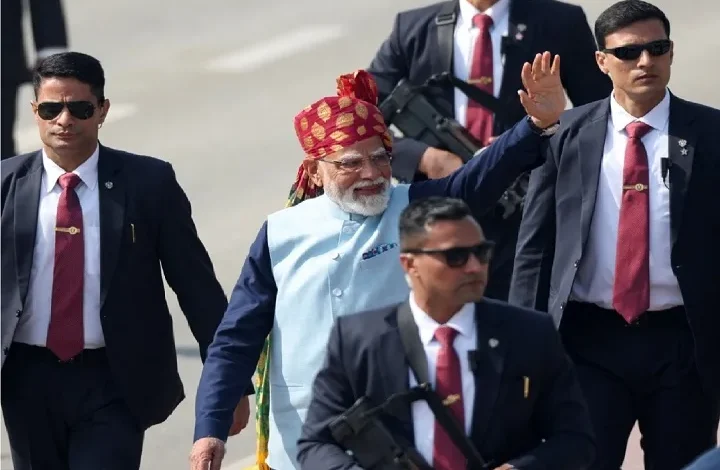
Modi’s Malaysia Visit Signals India’s Expanding Strategic Ambitions in Southeast Asia

KUALA LUMPUR — The upcoming visit of Indian Prime Minister Narendra Modi to Malaysia is widely seen as a key step in New Delhi’s efforts to strengthen its strategic, political, and economic footprint in Southeast Asia amid intensifying global rivalries.
Analysts believe the visit goes beyond conventional diplomacy and reflects India’s determination to position itself as a major player in the evolving regional order shaped by competition between China and the United States.
According to Dr Chee Meng Tan from the University of Nottingham Malaysia, Malaysia plays a pivotal role in India’s regional strategy.
“For India, Malaysia is more than a bilateral partner. It serves as a gateway to ASEAN and the wider Southeast Asian market,” he said.
Malaysia’s Geostrategic Advantage
Dr Tan highlighted Malaysia’s proximity to the Strait of Malacca as a major factor in its geopolitical relevance.
“The strait is one of the world’s most critical shipping routes, making Malaysia strategically important to major powers,” he noted.
He added that Malaysia, Indonesia, and Singapore play a vital role in maintaining maritime security and regional stability.
India as a Regional Balancer
In the broader geopolitical context, India is increasingly viewed as a balancing force in Southeast Asia.
Dr Tan explained that many ASEAN nations welcome India’s growing engagement as a way to diversify their strategic partnerships.
“No country wants to be overly dependent on a single major power. India offers an alternative,” he said.
However, he stressed that ASEAN continues to prioritise neutrality and strategic autonomy.
Deepening Malaysia–India Cooperation
Modi’s visit is also expected to strengthen bilateral cooperation in trade, technology, education, and defence.
Malaysian Prime Minister Anwar Ibrahim has consistently expressed his government’s commitment to expanding ties with India, particularly in the digital economy, renewable energy, and industrial development.
Trade between the two countries has grown steadily, reinforcing India’s position as one of Malaysia’s key South Asian partners.
A Message to Major Powers
Observers view the visit as a clear signal of India’s intention to build long-term influence in Southeast Asia.
Through platforms such as the ASEAN–India Summit, New Delhi continues to enhance cooperation in maritime security, trade, and technological innovation.
Dr Tan noted that India’s inclusive and non-confrontational diplomatic approach has helped it gain trust in the region.
Looking Ahead
In the long term, the visit is expected to facilitate new initiatives in investment, research, education, and infrastructure development.
If managed effectively, Malaysia could emerge as India’s primary partner in Southeast Asia, boosting its diplomatic standing and economic prospects.
Overall, the visit reflects shifting power dynamics in Asia, with India increasingly asserting itself as a significant and influential regional actor.
-wilayah.com.my