
Malaysia Accelerates AI Ambitions Through Green Infrastructure And Inclusive Digital Strategy

KUALA LUMPUR: Malaysia is intensifying its national artificial intelligence (AI) strategy through a comprehensive approach centred on sustainable infrastructure, inclusive digital access and wider integration of AI technologies across major economic sectors.
Deputy Prime Minister Fadillah Yusof said the government has identified three core priorities aimed at positioning Malaysia not only as a technology adopter but also as one of the region’s leading AI-driven digital economies.
He said the first priority focuses on developing greener and more energy-efficient AI infrastructure as demand for computing power and data centre capacity continues to rise globally.
According to him, AI expansion must be balanced with environmental sustainability to ensure digital economic growth does not place excessive pressure on national energy resources and the environment.
“Malaysia does not want AI development to occur without proper safeguards that could negatively affect the environment.
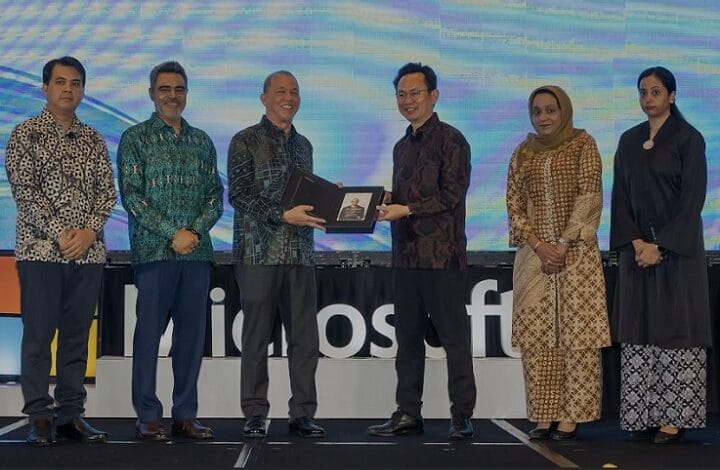
“Instead, we want digital growth to be powered by renewable energy, energy-efficient technologies and sustainable green infrastructure,” he said during the AI Leadership Summit organised by Microsoft.
Fadillah Yusof, who also serves as Minister of Energy Transition and Water Transformation, said data centres have become critical infrastructure supporting the future global digital economy and therefore require more strategic energy planning.
He noted that Malaysia sees AI and the broader digital economy as major opportunities to drive high-value growth, attract foreign investment and accelerate local technological development.
At the same time, the government wants AI benefits to reach all segments of society rather than being concentrated among large technology corporations or selected groups.
According to him, AI literacy programmes will be expanded across schools, educational institutions, small and medium enterprises and the public sector to better prepare Malaysians for future digital economic changes.
“The government wants Malaysians to understand and utilise AI productively rather than simply becoming passive technology users.
“We want society to possess the skills needed to adapt to the changing digital economy and future job market,” he said.
He added that democratising technology access is essential to prevent the digital divide from widening as Malaysia transitions towards an AI-driven economy.
The government is also focusing on applying AI solutions within strategic industries such as manufacturing, agriculture, healthcare, energy and water management.
According to him, AI is increasingly being used to improve productivity, accelerate data analysis, optimise resource management and support faster, more accurate decision-making processes.
“AI is no longer just a future technology. It has already become an important tool for strengthening economic competitiveness and improving service delivery systems,” he said.
He further explained that the adoption of smart digital technologies within the energy sector aligns with the National Energy Transition Roadmap (NETR), which targets approximately 70 per cent renewable energy capacity by 2050.
Achieving that goal, he said, would require smarter and more adaptive energy systems capable of supporting Malaysia’s transition towards cleaner and more sustainable energy sources.
Further elaborating on Malaysia’s AI direction, he stressed that technological innovation must always be guided by integrity, accountability and inclusiveness to ensure the benefits are shared widely across society.
“Malaysia must move boldly in embracing innovation to remain globally competitive.
“At the same time, technology must be developed responsibly and guided by human values to ensure its benefits can be enjoyed by everyone,” he said.