Klang Chinese Muslim Jamek Mosque attracts 55,000 visitors, boosts Islamic tourism

KLANG: Despite being located in an area where only about 15 percent of the population is Muslim, the Klang Chinese Muslim Jamek Mosque in Taman Desawan Dua, here, has emerged as a new catalyst for Islamic tourism in Selangor.
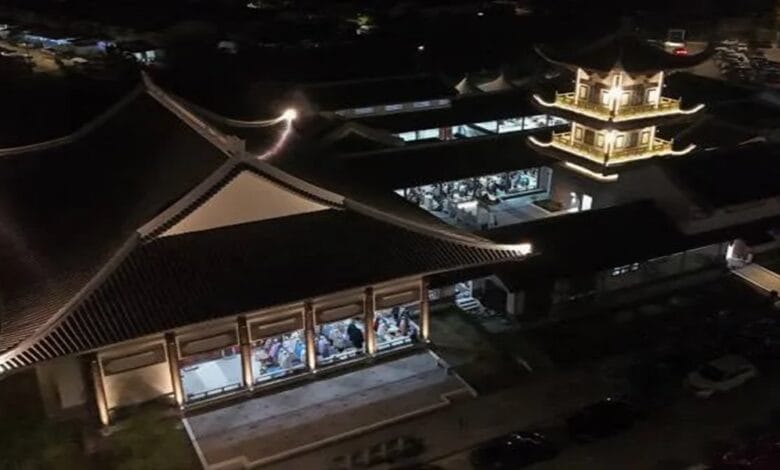
Built on 1.2 hectares of land, the mosque not only meets the worship needs of local pilgrims, but also serves as a stopover destination for local and international visitors who want to learn about Islam through its architecture, heritage and community openness.
The mosque’s imam, Adlu Kan Yong Sheng, 31, said the uniqueness of the traditional Chinese architecture highlighted by the mosque, including the curved roof elements and three-storey pagoda tower inspired by the Xi’an Great Mosque in China, contributed to its tourist appeal.
He said the design, which is also equipped with a garden landscape and a koi fish pond, makes the Klang Chinese Muslim Jamek Mosque the first mosque in Selangor to feature such architecture, thus attracting the interest of tourists from various backgrounds.
“The request to build a mosque began with the President of the Malaysian Chinese Muslim Association (MACMA), Datuk Prof Dr Taufiq Yap Yun Hin and received inspiration and approval from the Sultan of Selangor, Sultan Sharafuddin Idris Shah, who paid special attention to the concept and design of the building as a symbol of cultural harmony.
“To ensure the authenticity of the architecture, Sultan Sharafuddin ordered a study visit to China to examine several historic mosques before the final design was chosen and approved,” he told Bernama.
Adlu said that the construction of the mosque, which began at the end of 2019, faced challenges when the COVID-19 pandemic hit the country, causing work delays and logistical constraints, but the project was finally successfully completed and the mosque began operating in August 2024.
Since operating, the mosque has received an encouraging response with more than 55,000 local and international visitors recorded as of December last year, including institutional visits from Australia, France, Germany and Japan.
He said the mosque’s main prayer room can accommodate approximately 350 worshippers at a time, with capacity that can be expanded to 1,000 people, thus enabling the mosque to organise large-scale programmes including activities related to Islamic tourism.
In terms of structure, he said, almost all building materials were obtained from local suppliers, except for several key elements such as the roof and granite stones which were imported from China to maintain the original traditional architectural elements, thus enhancing the heritage value and tourism aesthetics.
“The architecture of this mosque attracts young visitors and photography enthusiasts, which seems to take them back to the days of ancient stories or kung fu movies, so many come to take pictures, record videos or have wedding and graduation photography sessions.
“In fact, there are visitors dressed in traditional Chinese Muslim clothing who come specially to take pictures in the mosque garden,” he said.
Also of interest is the Islamic art gallery which houses valuable collections from China, including 30 hand-carved gourds, each containing a part of the Quran, as well as manuscripts and translations of the Quran in Mandarin, which serve as a medium of education and preaching.
Adlu said that the existence of a cafeteria in the mosque compound offering traditional Chinese dishes such as mi tarik, dim sum and pau also completes the visitor experience, in addition to planning a cooking program to teach the community how to prepare halal Chinese dishes.
He said this would expand the role of mosques, which are not only seen as places of worship, but also educational spaces and cultural attractions that connect local communities with visitors from various backgrounds.
On 5 Dec 2024, Sultan Sharafuddin agreed to open the Klang Chinese Muslim Jamek Mosque and expressed the hope that the construction of the mosque, alongside other houses of worship in the surrounding area, would not only become a symbol of unity but also a landmark and major tourist attraction in Selangor.
— BERNAMA