
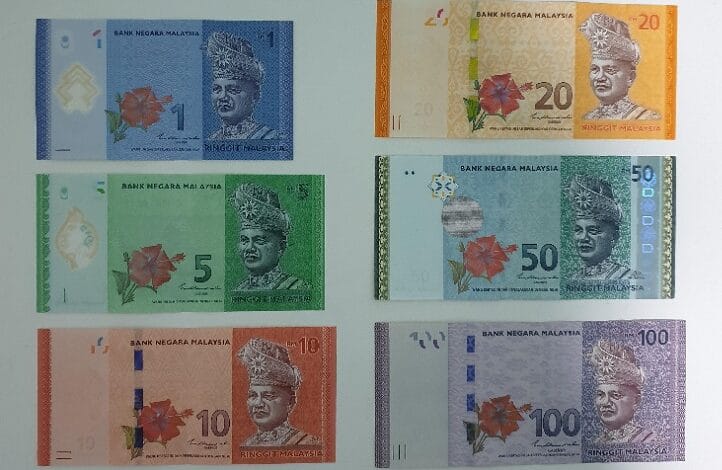
Ringgit Ends Slightly Lower Against US Dollar as Geopolitical Uncertainty Weighs on Market

KUALA LUMPUR: The ringgit closed marginally weaker against the US dollar on Monday, as investors remained cautious amid ongoing geopolitical uncertainties in West Asia.
At the close of trading around 6pm, the local currency stood at 3.9515/9555 against the US dollar, compared with 3.9505/9545 at last Friday’s close. The movement reflects a narrow trading range, indicating a wait-and-see approach among market participants.
Chief economist at Bank Muamalat Malaysia Bhd, Mohd Afzanizam Abdul Rashid, said the ringgit traded between 3.9515 and 3.9583 during the session, with external factors continuing to dominate market direction.
He noted that geopolitical developments, particularly involving US-Iran relations and the potential reopening of the Strait of Hormuz, remain key drivers of investor sentiment.
“Uncertainty surrounding these developments continues to influence market behaviour and capital flows,” he said.
Stronger US Dollar Adds Pressure
The US dollar strengthened earlier, reaching a one-week high as the Dollar Index rebounded to around 98.47.
This recovery has placed additional pressure on regional currencies, including the ringgit, which tends to be sensitive to shifts in global sentiment and movements in major currencies.
Meanwhile, global oil prices rose sharply, with WTI and Brent crude increasing by more than six per cent to trade near US$89.80 and US$95.82 per barrel.
While higher oil prices can sometimes support commodity-linked currencies, the current environment is being shaped more by geopolitical concerns than by commodity fundamentals.
Mixed Performance Against Major and Regional Currencies
The ringgit showed mixed performance against major currencies, gaining slightly against the British pound and the euro, but weakening against the Japanese yen.
Against regional peers, the local currency was mostly lower, declining against the Singapore dollar and Indonesian rupiah, while remaining relatively stable against the Thai baht and Philippine peso.
This trend reflects broader regional pressures influenced by global capital flows and expectations surrounding monetary policy in major economies.
Cautious Market Outlook
Overall, the ringgit’s narrow movement suggests that markets remain cautious as they await further clarity on geopolitical developments and global economic trends.
Analysts expect volatility to persist in the near term, particularly if geopolitical tensions escalate or if there are shifts in commodity prices and global financial policies.
-wilayah.com.my