Perlis DUN Postponement Fuels Leadership Questions, MB Pushes Back Against Mounting Pressure

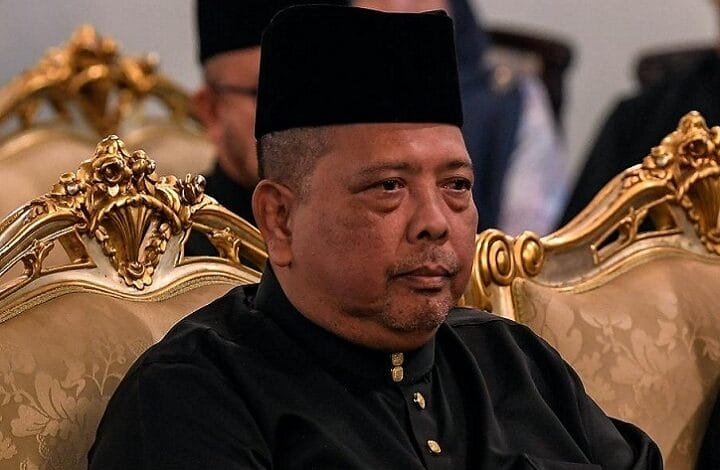
KANGAR, April 19 — The postponement of the Perlis state legislative assembly has intensified political pressure on Menteri Besar Abu Bakar Hamzah, with critics questioning whether the delay signals deeper challenges within the state administration.
Originally scheduled for April 21 to 23, the Dewan Undangan Negeri (DUN) sitting was deferred, prompting immediate calls for clarification from opposition representatives, particularly those aligned with Parti Islam Se-Malaysia.
The opposition has framed the delay as a matter of governance transparency, arguing that legislative sittings are essential for accountability and public oversight. Some lawmakers have suggested that postponements, even if procedural, can raise concerns about the administration’s readiness.
Responding to the criticism, Abu Bakar rejected the narrative that the delay reflects instability, insisting instead that it is part of a deliberate effort to reorganise the state government’s internal operations.
“This issue has been politicised unnecessarily. From our perspective, it is a routine administrative adjustment,” he said after attending a local event in Kangar.
The Menteri Besar acknowledged that both he and the state’s senior administrative leadership are still in the early stages of their tenure, which has necessitated a period of restructuring.
He argued that taking time to refine processes would ultimately lead to a more effective and orderly legislative session.
“We want to ensure that when the assembly sits, it is conducted properly and efficiently. That requires preparation,” he said.
Despite the reassurances, the timing of the postponement has continued to draw scrutiny, particularly given the proximity of the original sitting date.
Abu Bakar emphasised that the state government remains within constitutional limits, noting that the assembly must convene within six months of its previous session — a deadline set for June 8.
“We are fully aware of the timeline and will meet it. There is no breach of any rule,” he said.
The political dimension of the issue has been further amplified by speculation surrounding a possible vote of no confidence, although no formal motion has been tabled.
Abu Bakar addressed the matter directly, stating that any such motion would fall under the authority of the Speaker, Rus’sele Eizan.
He added that the current balance of support within the assembly does not indicate an imminent challenge to his leadership.
“At this stage, I do not see a major problem. The numbers appear balanced, and the situation remains stable,” he said.
Nevertheless, political observers note that even in the absence of formal challenges, perceptions of instability can influence public confidence.
They argue that delays in legislative proceedings often carry symbolic weight, particularly in politically sensitive environments.
Abu Bakar, however, maintained that his administration’s focus remains on governance rather than political optics.
He confirmed that the postponement had been communicated through official channels, including the assembly secretary, ensuring that procedural requirements were met.
As the June deadline approaches, attention is expected to remain on whether the state government can successfully reconvene the assembly and address concerns raised by the opposition.
For now, the issue underscores the intersection between administrative decisions and political interpretation, where even routine actions can become points of contention.
-wilayah.com.my