
ART Clause Does Not Affect State Authority Over Mineral Revenue, Deputy Minister Says

KUALA LUMPUR, Feb 24 — The federal government has assured that provisions under the Reciprocal Trade Agreement (ART) between Malaysia and the United States will not undermine state authority over mineral resources or revenue.
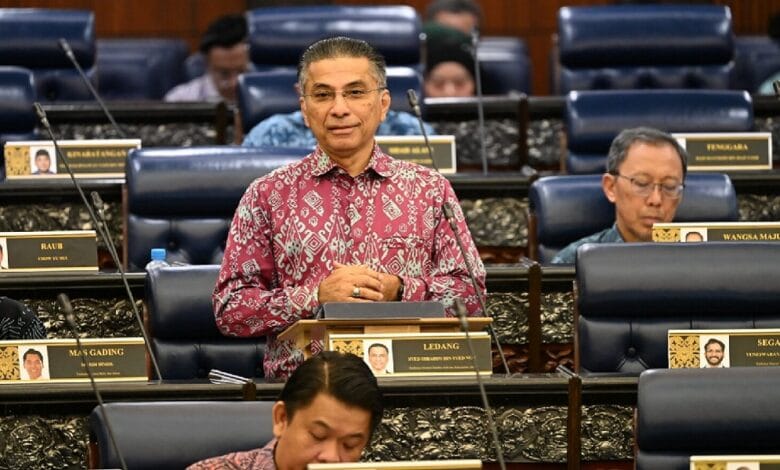
Deputy Minister of Natural Resources and Environmental Sustainability Syed Ibrahim Syed Noh said Clause 5.2.3, which provides for a joint mechanism to assess incoming investments involving rare earth elements and critical minerals, does not transfer any powers from state governments to the federal administration.
He emphasized that under Malaysia’s Federal Constitution, mineral resources fall under the jurisdiction of state governments, as specified in the Ninth Schedule, State List.
This includes authority over land ownership, mining leases, licensing approvals and royalty collection.
“The clause does not alter the constitutional framework. State governments retain full authority over their mineral resources and associated revenue,” he said during a question-and-answer session in the Dewan Negara.
He was responding to a question from Senator Pele Peter Tinggom regarding the potential implications of the clause on state powers.
Syed Ibrahim said the mechanism is intended to strengthen investment oversight, particularly in sectors involving strategic and critical minerals.
He noted that the approach aligns with international practices adopted by countries such as Australia and members of the European Union.
According to him, the mechanism is designed to assess potential risks related to foreign investment, including concerns involving national security, sensitive technologies and supply chain stability.
He stressed that it is not intended to override state authority.
He explained that if any investment is deemed to pose security risks, it would undergo additional review at the federal level.
However, final approval for mining leases and licenses would remain under state jurisdiction.
Syed Ibrahim said the initiative could help attract higher-quality investments into Malaysia’s mineral sector.
This would also support the development of downstream processing industries.
Such developments could enhance the value of Malaysia’s mineral resources and contribute to economic growth.
He added that expanding downstream industries would help reduce reliance on raw mineral extraction.
Instead, Malaysia could strengthen its position in global supply chains for critical minerals.
The government believes the mechanism will improve investor confidence.
It also aims to ensure Malaysia remains competitive in attracting strategic investments.
At the same time, Syed Ibrahim reiterated that protecting state rights remains a priority.
He said all international cooperation in the mineral sector would respect constitutional provisions.
The government is committed to balancing investment growth with the protection of state interests.