
Scientists Discover How a Tiny Protein Helps the Brain Preserve Lifelong Memories

KANSAS CITY: A major scientific breakthrough has shed new light on how the human brain transforms everyday experiences into lasting memories, following a landmark study by the Stowers Institute for Medical Research.
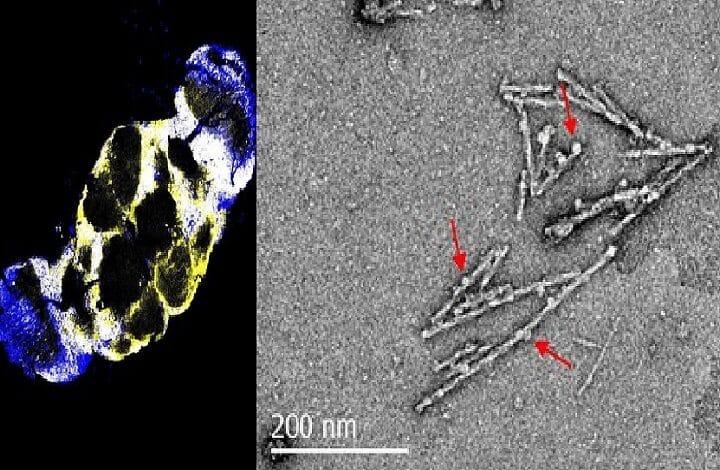
The research, spanning more than two decades, provides the first direct evidence that the nervous system can deliberately form regulated amyloids to support long-term memory storage.
This finding challenges the long-standing belief that amyloids are solely harmful structures associated with neurodegenerative diseases.
Scientific Director Kausik Si said the study demonstrates how precisely controlled protein assemblies allow memories to endure.
“The brain can trigger amyloid formation at specific times and locations in response to experience. This is how unstable molecules become stable memories,” he explained.
Published in a Leading Scientific Journal
The study was published in Proceedings of the National Academy of Sciences on January 30, 2026 and focuses on chaperone proteins in fruit fly neurons.
Traditionally, chaperones were believed to prevent harmful protein aggregation. However, researchers discovered that certain chaperones actively promote the formation of functional amyloids that store information.
This finding significantly expands current understanding of protein behaviour in the brain.
Identification of the “Funes” Protein
The team identified a previously unknown chaperone protein called “Funes,” which regulates the assembly of the memory-related protein Orb2 at neural synapses.
Experiments showed that fruit flies with elevated Funes levels retained learned associations for more than 24 hours, indicating stronger long-term memory.
When Funes was modified to block amyloid formation, memory consolidation failed, confirming its essential role.
New Hope for Neurological Treatment
Researchers believe the discovery could pave the way for innovative treatments for amyloid-related brain disorders.
By activating or regulating specific chaperones, scientists may be able to redirect toxic amyloids into safer forms or enhance the brain’s natural memory mechanisms.
“This approach could potentially counteract disease-causing protein aggregates,” Si said.
The study also revealed links between chaperone-related genes and psychiatric conditions such as schizophrenia, suggesting broader relevance to mental health research.
A New Era in Memory Science
Neuroscience experts describe the findings as a milestone in understanding how memories are formed and maintained.
The research answers a century-old scientific question and lays the foundation for future studies in learning, cognition, and brain disorders.
Overall, the discovery shows that protein structures once considered destructive may, in fact, be fundamental tools that enable the brain to preserve human experience.
-wilayah.com.my