
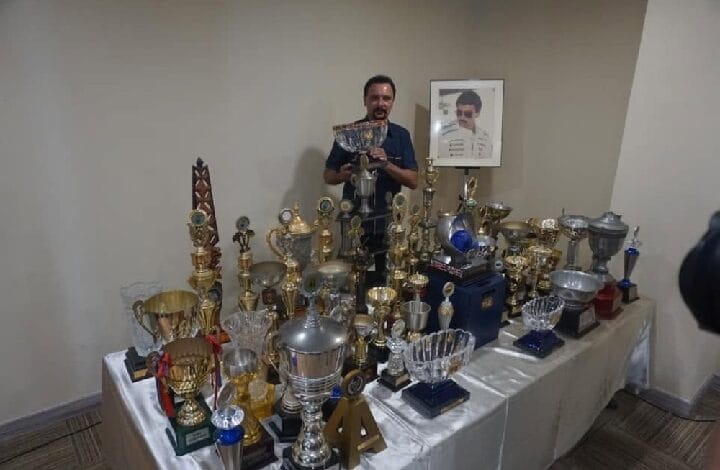
Karamjit Singh Dreams of a New Golden Era for Malaysian Rallying

KUALA LUMPUR: For Malaysian rally legend Karamjit Singh, past glory is not enough.
More than 20 years after becoming the first Asian driver to win the FIA Production World Rally Championship (PWRC), the man affectionately known as the “Flying Sikh” still dreams of seeing Malaysia return to the top of Asian rallying.
At 63, Karamjit continues to compete, driven by the same passion that once carried him to the pinnacle of world rallying.
Yet, unlike his glory days, he now races under very different circumstances.
The factory-backed teams, abundant resources and strong corporate support that once propelled him to success are no longer there.
Instead, he finds himself carefully preserving an ageing rally car and managing limited resources just to remain competitive.
“Most parts of my car are old.
“Nowadays I’m basically driving just to preserve the car.
“I can’t drive the way I want because if I push the car 100 per cent, it will break,” he said.
Despite the challenges, Karamjit refuses to give up.
His dream is not merely to continue racing but to witness the revival of Malaysian rallying and inspire a new generation of drivers.
“I hope Malaysians remember the good days.
“But more importantly, I hope they look towards the future.
“We want to revive our golden era from the 1980s and 1990s.
“At that time, all of Asia came to Malaysia to learn how to organise rallies.
“That is my hope and I truly hope it happens because Malaysia deserves it,” he said.
Karamjit’s historic PWRC victory in 2002 remains one of Malaysia’s greatest sporting achievements.
Racing under the Petronas EON Racing Team (PERT), he became a symbol of national pride and demonstrated that a Malaysian driver could compete and win on the world stage.
Former Proton Motorsport chief Datuk Abdul Razak Dawood believes Malaysia has yet to fully capitalise on Karamjit’s legacy.
“What is important is that we have a talent.
“A world-class talent, not just for Malaysia but for the entire Asia-Pacific region,” he said.
According to Abdul Razak, motorsport brings far more benefits than sporting success alone.
He recalled how Malaysia’s involvement in Formula One and Proton’s rally achievements generated enormous economic value and enhanced the country’s international image.
“The business turnover generated for the country was huge.
“Many people benefited directly and indirectly.
“And Malaysia gained global recognition and valuable media exposure,” he said.
The rally programme that produced Karamjit’s greatest achievements was built through PERT, a partnership involving Proton, Petronas and EON.
Working alongside Mitsubishi’s famed Ralliart division, the team enjoyed remarkable success in regional and international competitions.
That legacy was later continued through Proton’s Race, Rally, Research (R3) division, which became synonymous with performance and motorsport excellence.
Former R3 head Tengku Djan Ley Tengku Mahaleel said motorsport was never just about winning races.
Instead, it was about creating a powerful brand identity.
“If motorsport is done properly, it creates brand value and a premium image,” he said.
One of R3’s most iconic achievements was the limited-edition Proton Satria Neo Lotus Racing model, which became an instant collector’s item and remains highly sought after by enthusiasts today.
However, sustaining that momentum proved difficult.
Over the years, sponsorship declined, manufacturer involvement weakened and Malaysia gradually lost its position as one of Asia’s leading rally destinations.
“We lost our sponsors.
“We lost our direction.
“There was no follow-up and manufacturers stopped giving support,” Abdul Razak said.
Karamjit himself admitted that inconsistent support has made life difficult.
He recalled periods when promised assistance failed to materialise following changes in leadership, leaving him to shoulder debts accumulated during his racing career.
“Until today, I’m still paying off those debts.
“RM100,000 is a lot of money,” he said.
Still, optimism remains.
Karamjit believes Malaysia possesses all the ingredients necessary for a rally revival, including extensive plantation roads suitable for gravel rallies, excellent infrastructure and decades of organisational experience.
More importantly, he believes Malaysians still have the passion to make it happen.
For the Flying Sikh, rallying is not just about speed or trophies.
It is about legacy, national pride and proving that Malaysia can once again become a force to be reckoned with in international motorsport.