
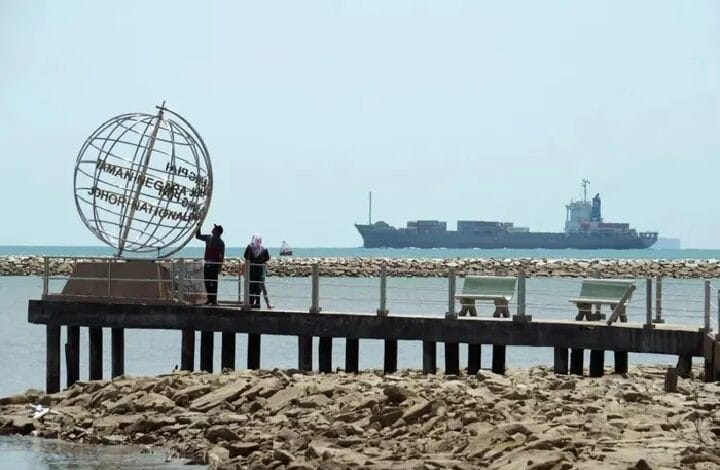
Asean Littoral States Must Unite to Keep Malacca Strait Neutral Amid Escalating Maritime Tensions

KUALA LUMPUR, April 26 — Southeast Asia’s key maritime guardians — Malaysia, Indonesia, Singapore and Thailand — are being urged to take a firm and coordinated stance to ensure the Strait of Malacca remains free from geopolitical manipulation, as global shipping routes come under increasing strain.
The warning comes at a time when instability in the Strait of Hormuz has begun to disrupt energy flows and commercial shipping, raising concerns that similar pressures could spill over into other critical waterways.
Stretching approximately 900 kilometres, the Malacca Strait is one of the world’s most vital maritime arteries, linking the Indian and Pacific Oceans while serving as the shortest route between East Asia and markets in Europe and West Asia. Its strategic position makes it indispensable for global supply chains and economic stability.
With close to 100,000 vessels transiting annually — or over 250 ships daily — the strait handles around 30 per cent of global maritime trade and a significant share of oil shipments. These figures underscore its central role in sustaining international commerce, particularly in an era of heightened geopolitical uncertainty.
Maritime analyst Nazery Khalid highlighted that prolonged disruptions in the Middle East could trigger widespread consequences far beyond the region. He noted that congestion in the Persian Gulf and surrounding waters is already causing delays that ripple across interconnected global ports, including those along the Malacca Strait such as Port Klang and Singapore.
According to him, global shipping networks are so tightly linked that any blockage in a major chokepoint inevitably leads to cascading disruptions elsewhere. The growing naval activity and vessel interceptions in the Gulf region have further intensified uncertainty among shipping operators.
At the same time, Tony Chia Han Teu warned that tensions in other strategic areas, including the Red Sea, are forcing shipping companies to adopt longer and costlier routes. Vessels rerouted around the Cape of Good Hope are experiencing delays of up to two weeks, reducing overall shipping efficiency.
This shift has driven up logistics costs, insurance premiums and fuel consumption, placing additional pressure on global trade flows. Industry observers describe the situation as a “dual chokepoint challenge,” where multiple disruptions simultaneously strain the international shipping system.
The growing uncertainty has also renewed attention on the “Malacca Dilemma,” a term used to describe China’s dependence on the strait for its trade and energy needs. As one of the world’s largest exporters, China relies heavily on uninterrupted access to this maritime route.
The importance of this relationship is reflected in Malaysia’s long-standing trade ties with China, which has remained its largest trading partner for 17 consecutive years, with total trade nearing US$192 billion in 2025. Key commodities flowing through the strait include electronics, machinery and petroleum products, all of which are essential to regional manufacturing ecosystems.
While alternative routes such as the Sunda and Lombok Straits exist, they are less efficient and significantly increase transit time and operational costs. As such, the Malacca Strait remains irreplaceable in the current global trade framework.
Experts emphasise that safeguarding the strait’s neutrality in accordance with international maritime law, particularly the United Nations Convention on the Law of the Sea (UNCLOS), is crucial. Any attempt to militarise or restrict access to the waterway could undermine global trade stability and disrupt decades of established norms on freedom of navigation.
As geopolitical tensions continue to reshape global logistics, the responsibility now rests on regional nations to preserve the Malacca Strait as a secure and open corridor, ensuring that it continues to serve as a backbone of international commerce.
-wilayah.com.my