
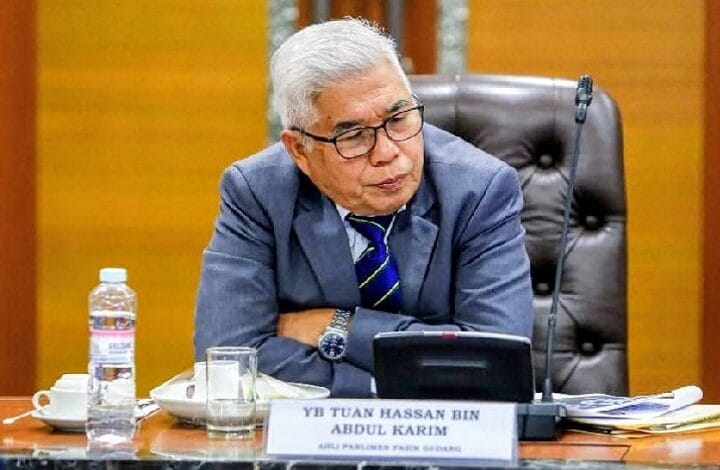
Hassan Calls for Zambry and Fadhlina to Resign Over UEC Issue

JOHOR BAHRU: Pasir Gudang Member of Parliament Hassan Abdul Karim has called on Higher Education Minister Zambry Abdul Kadir and Education Minister Fadhlina Sidek to resign following the government’s decision to open selected admission pathways into public universities for holders of the Unified Examination Certificate (UEC).
According to him, both ministers are responsible for safeguarding Malaysia’s National Education Policy, including matters involving examination systems and admission requirements into public higher education institutions.
He claimed their failure to oppose the Cabinet’s decision on the matter amounted to a failure in carrying out their responsibility to defend the national education framework.
“The failure of these two ministers from UMNO and PKR to defend the National Education Policy on the issue of UEC recognition cannot be forgiven.
“They should resign immediately,” he said in a statement issued today.
Earlier, Kementerian Pendidikan Tinggi announced that graduates from tahfiz institutions and Chinese independent secondary schools (SMPC/UEC) would be allowed to apply for selected programmes identified by public universities.
The decision followed Cabinet approval for a new admission pathway involving students from outside Malaysia’s national education system.
However, the government stressed that the move does not amount to formal recognition of the UEC examination system, but merely provides limited admission access to specific programmes subject to additional conditions, including possession of the Sijil Pelajaran Malaysia (SPM).
Among the requirements imposed are a credit in Bahasa Melayu, a pass in History and compliance with individual university academic criteria.
The UEC issue continues to generate debate among politicians and the public because it involves questions surrounding national education policy, academic standards and the role of Malaysia’s examination system.
In his statement, Hassan argued that both ministries should have taken a firmer stand in defending the national education framework before the Cabinet decision was made.
According to him, public university admissions involve not only access to education but also broader questions concerning national academic standards and the position of the country’s mainstream examination systems.
The latest development has triggered mixed reactions from political parties, education groups and members of the public with differing views on UEC recognition and alternative university admission pathways.
Several political leaders had earlier voiced concerns that broader acceptance of UEC qualifications could create differing academic standards for entry into public universities compared with existing pathways such as STPM, matriculation and foundation programmes.
Nevertheless, the government maintains that all public university admissions remain subject to merit-based evaluation, academic requirements and the approval of university senates.
-wilayah.com.my