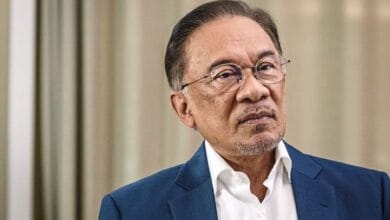
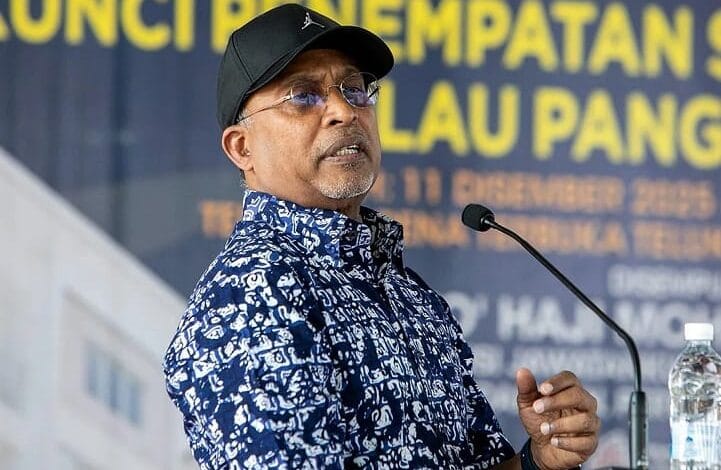
Zambry Defends National Education Policy, Says Dong Zong Criticism Misses the Bigger Picture

Zambry Abd Kadir has defended the government’s stance on the Unified Examination Certificate (UEC), stressing that Malaysia’s national education foundations cannot be weakened simply to satisfy demands from specific groups.
The minister described recent criticism from Dong Zong as misplaced and lacking consideration for the broader responsibility of preserving national identity through education policies.
According to Zambry, the country’s education system should not be judged solely from the perspective of academic access or university admission opportunities.
Instead, he said education must also be recognised as an essential instrument for nation-building, social cohesion and strengthening understanding of Malaysia’s historical and constitutional foundations.
“In a multicultural nation like Malaysia, education serves a much larger purpose than academics alone. It is one of the key pillars in uniting society and building a shared national identity,” he said in a statement.
His remarks came after Dong Zong criticised the government’s recent decision allowing UEC holders to apply for selected Chinese language and literature programmes at public universities, provided they obtain a credit in Bahasa Melayu and pass History in the SPM examination.
Dong Zong had argued that the decision remained unclear and failed to fully reflect educational fairness because of the conditions imposed on applicants.
However, Zambry insisted that the Bahasa Melayu and History requirements should not be viewed as barriers, but rather as important elements in ensuring students entering public universities possess a proper understanding of the nation’s core foundations.
He stressed that Bahasa Melayu holds a unique constitutional position as the national language and has long functioned as a unifying medium for Malaysians from diverse ethnic backgrounds.
At the same time, he said History education remains equally important because it helps younger generations appreciate the country’s formation, constitutional system and national journey since independence.
According to the minister, these principles must be protected consistently and cannot be altered merely because of political pressure or demands rooted in group interests.
Zambry also reiterated that the government remains open to expanding educational opportunities for students from various academic streams, but such openness must continue operating within Malaysia’s national framework.
He pointed out that public universities are national institutions governed by government policies, giving authorities the responsibility to establish conditions that safeguard educational standards and social harmony.
“The government remains committed to ensuring higher education stays inclusive and high quality, but inclusiveness does not mean abandoning the country’s core principles,” he said.
The issue of UEC recognition has remained one of the most debated topics in Malaysia’s education landscape for decades due to its close connection with language policy, national identity and multicultural integration.
While supporters of broader UEC recognition see it as part of embracing educational diversity, others maintain that national language and history requirements must remain central to preserving unity and social cohesion.
Observers believe the government’s latest stance reflects an effort to balance educational openness with the protection of long-standing national foundations that have shaped Malaysia since independence.
-wilayah.com.my