
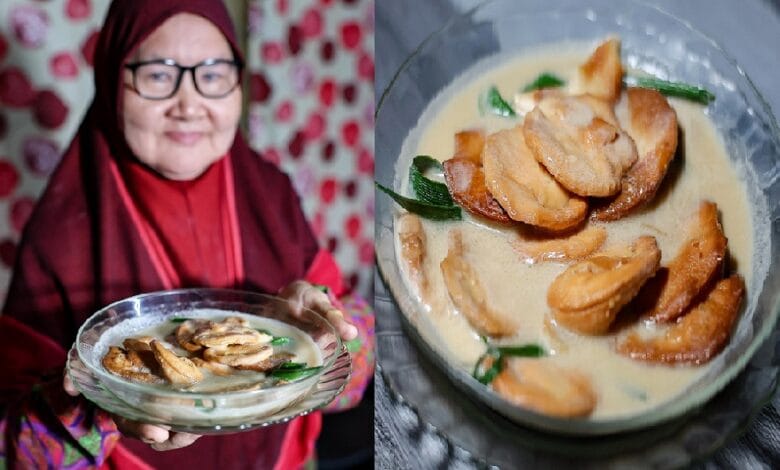
Perak’s ‘Bubur Biskut Kapal’ Revives Sweet Ramadan Memories

PARIT — A traditional dessert known as bubur biskut kapal continues to evoke nostalgic memories among communities in Perak, particularly for those who grew up between the 1970s and early 1990s.
The creamy dessert, made using simple biscuits and coconut milk, is more than just a sweet treat. For many families, it represents a cherished tradition often served during family gatherings, festive celebrations and throughout the month of Ramadan.
In parts of Central Perak, the dish is also known as pengat biskut kapal and was once widely prepared during communal meals and family events.
Rosnani Mohd Yunus, 64, said the traditional dessert is believed to have been introduced by migrants from Penang and Kedah who moved to Central Perak in the 1960s and 1970s to pursue agricultural opportunities.
Many of these migrants initially worked in paddy fields and plantations before eventually settling in the region and establishing families with local residents.
“They brought with them many traditional recipes from their hometowns, including this biscuit porridge. Over time it became popular and was frequently prepared during family gatherings and special occasions,” she said when met at her home in Kampung Seri Kaya.
Rosnani, who originates from Bota Kiri, said she first tasted the dessert when she was 12 years old after being introduced to it by her mother, who was from Penang.
The mother of eight recalled that her mother had a deep passion for cooking and often prepared traditional dishes for the family.
“I would sit beside my mother in the kitchen while she cooked. That was how I learned about the ingredients and the preparation process for this dessert,” she said.
She explained that the main ingredients used to prepare bubur biskut kapal include fresh coconut milk, palm sugar, pandan leaves, a pinch of salt and ship biscuits — a type of dry, plain biscuit.
The preparation begins by simmering coconut milk with pandan leaves until the mixture releases a fragrant aroma.
Palm sugar is then added to create the dessert’s signature sweetness and natural caramel-like colour.
The mixture must be stirred slowly over moderate heat to prevent the coconut milk from separating while producing a smooth and slightly thick texture.
Once the sugar dissolves completely, a small amount of salt is added to balance the sweetness of the dish.
The biscuits are added at the final stage so they do not break apart and can absorb the rich coconut gravy while remaining soft when served.
Rosnani said the dessert remains popular partly because it is simple to prepare and requires only a short cooking time.
According to her, the dish can be ready in less than 10 minutes, making it a convenient dessert to serve guests during Ramadan gatherings.
Beyond its taste, the dessert also carries sentimental value as it reminds her of her childhood and the warmth of family moments spent in the kitchen.
“I love this dessert because it reminds me of my mother’s kitchen and the laughter of my siblings as we helped prepare food during Ramadan,” she said.
To ensure the tradition continues, Rosnani now involves her children in the cooking process so the recipe can be preserved for future generations.
She believes preserving traditional dishes is not only about maintaining flavours but also about safeguarding cultural heritage and family memories passed down through generations.
-wilayah.com.my